
The Story
Why it exists.
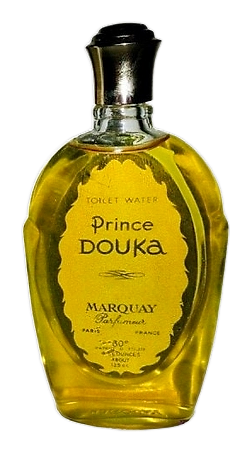
Prince Douka emerged in 1927, a relic from an earlier perfume house that Marquay later adopted. Its name evokes a regal figure, a nod to aristocratic allure of interwar France. The formula, rooted in aldehydic brilliance, was crafted to capture the optimism of a society rebuilding after conflict, blending crispness with a tender floral core.
If this were a song
Community picks
La Vie En Rose
Édith Piaf
The Beginning
Prince Douka emerged in 1927, a relic from an earlier perfume house that Marquay later adopted. Its name evokes a regal figure, a nod to aristocratic allure of interwar France. The formula, rooted in aldehydic brilliance, was crafted to capture the optimism of a society rebuilding after conflict, blending crispness with a tender floral core.
At a time when many scents leaned heavy on musk and leather, the creators chose a daring trio: bright aldehydes, a bouquet of undefined florals, and an oriental base that hinted at amber and spice. This contrast mirrored the era’s dance between modernity and tradition, offering wearers a bridge between bustling cafés and quiet boulevards.
The Evolution
The opening bursts with a clean aldehydic flash, like freshly pressed linens catching morning light. Within ten minutes the floral heart unfurls, a soft veil of rose‑like petals that never fully reveal their identity, keeping the scent intriguingly vague. As the day wears on, the oriental base settles, amber‑tinged warmth mingling with a subtle spice that clings to skin for four to six hours. The drydown remains moderate in projection, leaving a lingering impression that feels both nostalgic and timeless, perfect for evenings when the city’s glow softens.
Cultural Impact
Since its 1927 debut, Prince Douka has been a quiet favorite among collectors of vintage French aldehydics. Its understated elegance places it alongside classic salon fragrances, appealing to those who appreciate heritage scents that whisper rather than shout. Wearers often cite its ability to evoke Parisian evenings of the late twenties.
The House
France · Est. 1946
Marquay is a Paris‑based perfume house that emerged in the immediate post‑war era. Its name pays homage to a small commune in the French countryside, reflecting a quiet reverence for place. Over the decades the brand has built a modest catalogue that includes the 1927 vintage Prince Douka, the 1946 debut L’Élu, the 1950 Traquenard and the 1957 Coup de Feu. Each launch carries a story of a specific moment in French cultural life, from the optimism of reconstruction to the swing of the late‑fifties. Marquay’s offerings are found in niche boutiques and specialist online platforms, where collectors appreciate the house’s continuity and its restraint‑driven aesthetic.
If this were a song
Community picks
Wearing Prince Douka feels like a vintage Parisian waltz, bright aldehydic opening, soft floral glide, and a warm amber finish, echoing late‑twenties elegance.
La Vie En Rose
Édith Piaf