Heritage
A house, in its own words
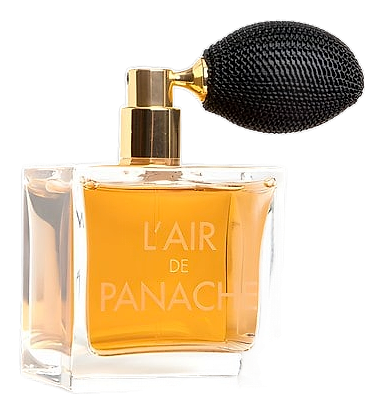
The Grand Budapest Hotel premiered at the Venice Film Festival in September 2014, but the film's connection to fragrance began long before its theatrical release. Wes Anderson is known for his obsessive attention to detail in building fictional worlds, and for The Grand Budapest Hotel, set in the fictional Republic of Zubrowka, he wanted a signature scent that would define his lead character. Monsieur Gustave H., played by Ralph Fiennes, serves as the legendary concierge of the Grand Budapest Hotel, a man of impeccable taste and old-world charm who maintains his standards even as his world crumbles around him. Anderson initially conceived L'Air de Panache as a fictional detail within this world, a fragrance that Gustave would wear as part of his carefully curated existence. The idea was not merely decorative but functional within the narrative. When it came time to promote the film, Anderson expanded this detail into something tangible. He commissioned the French fragrance house Nose to create an actual scent for the Paris premiere. Nicolas Cloutier, president of Nose, oversaw the project and brought in perfumer Mark Buxton to handle the actual composition. The result was a fragrance designed to embody everything Gustave H. represents: polish, composure, and a certain Continental elegance that belongs to another era. The collaboration between Anderson's film production and the fragrance industry produced something unusual, a piece of merchandise that transcended typical promotional items to become a collectible object with its own identity. The scent gave fans a way to experience the film's world beyond the screen, literally wearing the fictional world that Anderson had constructed. The creation of L'Air de Panache reflects a philosophy that treats fragrance as character development. In filmmaking, costume, set design, and music typically serve narrative purposes, but Anderson extended this thinking to scent. The fragrance needed to feel like something Monsieur Gustave H. would actually wear, a detail that made the character more vivid and the world more believable. This approach treats fragrance not as a commercial product but as an extension of storytelling, a way of adding depth to a fictional universe. The philosophy behind the scent also reflects Anderson's broader aesthetic, which favors precision, symmetry, and a certain retro formality. The fragrance was not designed to appeal to broad markets or follow fragrance industry conventions. Instead, it was conceived as a character element, something that would enhance the atmosphere of the film and give audiences another way to connect with the story. The collaboration between Anderson and Buxton centered on this narrative function rather than commercial considerations. The goal was authenticity within the fictional context, creating a scent that felt like it belonged to Gustave H.'s world. This meant embracing the specific rather than the generic, building a fragrance that could stand as a detail within Anderson's carefully constructed universe. The philosophy rejects the idea of fragrance as pure commercial product, instead positioning it as a form of artistic expression that can serve narrative purposes.