Heritage
A house, in its own words
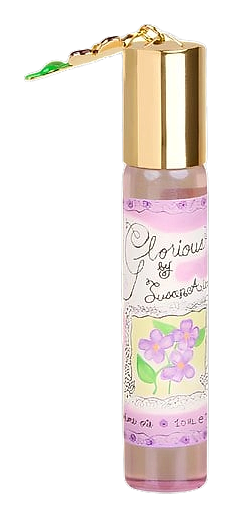
Susan Alexandra's documented history is tied to New York and to the brand's development across fragrance, home scent, and lifestyle products. The available research does not establish a founding date, named founder, or a detailed company origin, so those details remain unconfirmed. The earliest specific material supplied for this profile is a factory-proof announcement for Glorious, Susan Alexandra's perfume oil, presented by the brand as a long-awaited release. That announcement identifies Susan Alexandra as the distributor and gives the brand's location as New York City. It also supplies the fragrance's first note structure, violet, grape, musk, ice, and amber. This places the brand's current perfume activity within a recognizable independent fragrance context, but it does not show when the company first began operating. Susan Alexandra has since expanded the brand beyond perfume oil into scented home and lifestyle goods, including candles, incense, and decorative or collectible items. Its sticker book, promoted as available online and in stores, reflects an approach that treats fragrance culture as something visual and collectible as well as olfactory. The supplied research includes unrelated results for Alexandria Fragrances and Juliette Has a Gun, which should not be treated as part of Susan Alexandra's history. Without stronger archival sources or independent reporting, the safest account is a New York-linked brand whose documented perfume milestone is the 2026 release of Glorious Perfume Oil, followed by a broader lifestyle catalogue built around scent and personal atmosphere. Susan Alexandra's creative vision appears to center on fragrance as an accessible part of daily identity and atmosphere. The brand's language invites people to discover scents for different parts of themselves and to explore fragrance through mood and setting. That idea is especially visible in Glorious, whose listed notes combine violet and grape with musk, ice, and amber. The result suggests a fragrance designed around contrast, pairing floral and fruit associations with a cool impression and a warm base. The supplied material does not identify a founder, perfumer, or formal perfumery manifesto, so the brand's wider philosophy is best described through its products rather than attributed to a named creative leader. Susan Alexandra's expansion into candles, incense, home fragrance, and accessories indicates that fragrance is treated as an ecosystem rather than a single product category. A scent can shape a personal ritual, a room, or a visual collection. This gives the brand a playful, lifestyle-oriented identity, while the perfume oil format points to a more intimate and portable way of wearing fragrance. The Glorious note description also communicates the brand's creative method directly, using vivid sensory terms instead of technical claims about concentration or longevity. In practical terms, the approach seems to favor discovery, emotional association, and the pairing of fragrance with visual objects that can live on a vanity, shelf, or desk.