
The Story
Why it exists.
The beginning
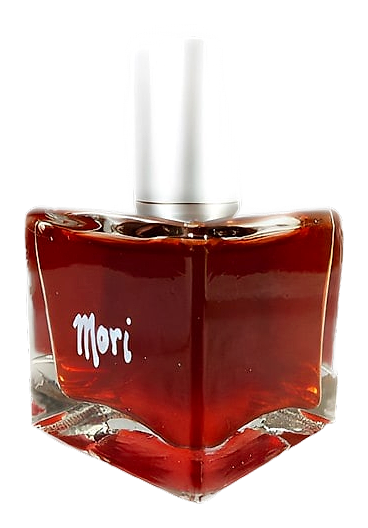
Josh Lobb built Mori in 2010 as a study in restraint. Where other fragrances layered complexity to impress, this one stripped everything back to a single material: Bourbon vanilla. The name itself, Mori, suggests something ancient and forest-born, a whisper from deep within rather than a shout from the entrance hall. Lobb was interested in what vanilla could become when freed from the obligation to perform. Not a signature note or a supporting actor, but the entire composition. The result was a fragrance that arrived without announcement and stayed without permission, the olfactory equivalent of arriving home to find someone already there, and realizing you're glad they stayed.
Bourbon vanilla carries more weight than most people realize. It's warm without being sweet in an obvious way, the powdery, slightly balsamic character gives it texture, depth, the feeling of something aged rather than manufactured. Combined with the soft spice that threads through the accord, Mori achieves something rare: a vanilla that feels grown rather than composed. The fragrance doesn't smell like a perfume. It smells like the warmth already present in skin when conditions are right. That's the trick, and the commitment. This isn't a fragrance that introduces itself. It's one you discover you've been wearing all along.
The evolution
The opening doesn't announce itself. One moment there's skin, the next there's Mori, a warm, powdery presence that seems to have been there all along. The Bourbon vanilla arrives fully formed, with none of the sharp transitional moments most fragrances rely on to signal their structure. It simply exists, close and quiet and certain of itself. Within the first hour the softness deepens. The powdery facet becomes more pronounced, and there's a warmth that moves closer to skin rather than away from it, the balsamic quality asserting itself, the soft spice grounding what could have been cloying into something sustained. By hour three the fragrance has become entirely personal. It moves with the body. It speaks only to the wearer. On fabric it lingers well into the next day, a faint sweetness, warm and familiar, like finding a forgotten scarf that smells like somewhere safe.
Cultural impact
Mori arrived in 2010 during the early indie perfume boom when niche brands were challenging mainstream conventions. Slumberhouse, founded by Josh Lobb in Oregon, positioned itself as anti-flamboyance in an era of loud projection and complex pyramids. The single-note approach was almost unheard of at retail scale; most perfumers insisted vanilla needed supporting structure. Mori proved otherwise, becoming a quiet cult favorite that influenced a generation of minimalist perfumers. Its discontinuation cemented its legend, making vintage bottles sought after by collectors. The fragrance represents a moment when niche perfumery valued intimacy and personal resonance over market appeal.