


Heritage
A house, in its own words
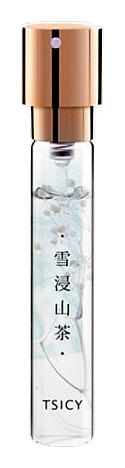
Qixi Tsicy was founded in China in 2022, emerging during a period of renewed interest in domestic niche perfumery and closer examination of regional botanical traditions. The house was established around the idea of expressing Chinese flowers and herbs through fragrance, a direction most clearly seen in the Ta Xiang botanical collection. Jasmine Heart and Peilan Angelica were released as part of this series in March 2022, establishing an early identity built around culturally specific plant subjects rather than a conventional western fragrance vocabulary. The catalogue expanded within its first year to include Snow Soaked Camellia, Cardamom Yanyu, and Misty Moon Bamboo Shadow, all dated to 2022. These titles explore recognizable aromatic materials from different registers, from the green, mineral character implied by bamboo to the dense floral presence of camellia and jasmine, and the sharper spice of cardamom. The brand is still young enough that its history is largely a story of formation rather than expansion into unrelated categories. Third-party fragrance platforms have documented its catalogue and availability, while broader coverage has placed Qixi Tsicy within the growing field of Chinese niche houses. Its heritage therefore rests on a focused debut collection and an early commitment to Chinese botanical perfumery, with limited public information about its founder, composition team, and exact production history. Qixi Tsicy approaches fragrance as an exploration of Chinese botanical culture. The Ta Xiang collection concentrates on native or culturally familiar flowers, herbs, spices, and aromatic plants, turning them into the central themes of individual scents. Jasmine Heart and Peilan Angelica, released in March 2022, make that intent especially clear. Their titles draw attention to jasmine and peilan rather than presenting generic floral or herbal accords. Later additions extend the same idea through camellia, cardamom, yanyu, and bamboo, subjects that can evoke climate, texture, season, and memory without relying only on conventional perfume descriptors. This approach places atmosphere alongside ingredients. A composition may be read as a landscape or a sensory impression rather than a straightforward ingredient list, giving the brand a narrative quality suited to collectors who value cultural specificity and unusual accords. The wider context supports this direction without requiring broader claims. Chinese niche perfumery has been increasingly discussed as a distinct and evolving field, while perfume traditions in the country have long included scented oils and the use of jasmine, rose, orange blossom, and other aromatic materials. Qixi Tsicy’s contribution is to package selected Chinese botanical references for a modern fragrance audience. Its identity remains deliberately compact, centered less on volume and more on the distinctiveness of each release.