The Story
Why it exists.
The beginning
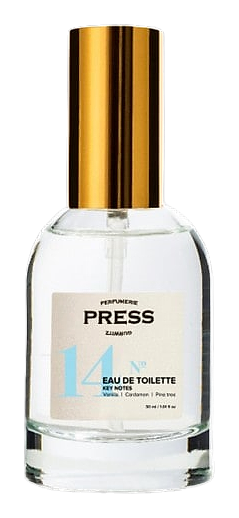
No. 14 exists in a specific moment, the hour when the day has turned and only you know it. The perfumers at Press Gurwitz built this fragrance around that tension: cool conifer opening, warm vanilla heart, and oud that settles close to the skin like something shared in confidence. The numbered collection doesn't name its scents. It numbers them. No. 14 is the one that asks you to slow down and let it arrive on its own terms.
The structure is what makes No. 14 interesting. A traditional oud fragrance opens with the oud, bold, resinous, immediate. Here, the oud comes last, barely. It shows up in the drydown and refuses to leave. The vanilla and cardamom create an unexpected warmth in the middle act, soft and almost powdery, that makes the evergreen pine feel less forest and more memory. It's a composition that trusts the wearer to wait. Most people do.
The evolution
The opening is cold. Pine and cardamom arrive sharp and green, cutting the air like a door opened in December. As the fragrance develops, the vanilla softens everything, the conifer edges round out, the spice settles, and what was sharp becomes warm and present. Then the oud. Not the first note you'd expect in a warm-vanilla composition, and not the loudest at any point. It's the last voice in the room, and it stays closest to the skin. The drydown runs long, with the resinous wood holding everything together and a faint sweet powder in the final act. On warm skin, the oud deepens. The vanilla persists in the background, never quite leaving. The contrast between the initial chill and the eventual warmth creates a narrative arc that rewards patience, as the fragrance shifts from an aromatic burst to something intimate and lasting.
Cultural impact
Pine tree and cardamom occupy distinct but complementary positions in perfumery's historical narrative. Pine has served as a foundational aromatic material in multiple traditions, its crisp, forest-like qualities lending an immediate sense of place and atmosphere. Cardamom brings a distinctive spice that provides contrast against the conifer character, its warm, slightly citrusy edge adding complexity and preventing the composition from feeling static. In contemporary Western perfumery, the convergence of these two elements frequently appears in wood-forward, aromatic compositions. No.