

Heritage
A house, in its own words
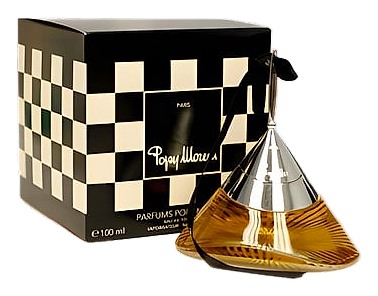
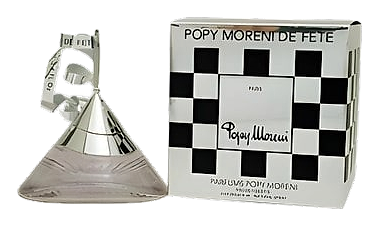
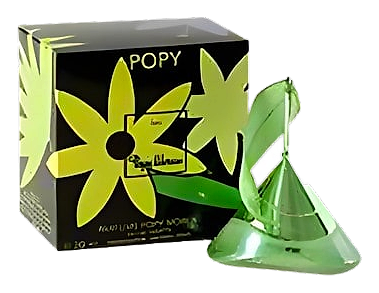
Popy Moreni, born in Italy, developed her design identity through work in Paris, establishing herself within a particular tradition of Italian creatives who gravitated toward the French capital for its fashion and luxury infrastructure. The fragrance arm of her business emerged in 1997 with the launch of the eponymous Popy Moreni, created in collaboration with perfumer Martin Gras. This initial scent established the visual and conceptual language that would characterize the subsequent releases. The brand maintained a deliberate pace of releases throughout its active period, introducing new compositions in 1998, 2000, 2001, and 2003. Thierry de Baschmakoff, who designed the packaging for the 1997 fragrance, contributed to the brand's visual coherence across its line. The production involved multiple perfumers and ingredient houses, suggesting a studio model rather than a single creative vision locked to one formulation house. Operating under the Aubusson corporate structure, the brand occupied a specific position within the niche fragrance landscape of the late 1990s and early 2000s. The five-fragrance output over six years reflects an unhurried approach to creation, with each release spaced between one and two years apart, indicating careful consideration rather than rapid product turnover. The brand's activity appears to have concluded following the 2003 release of PM, leaving the collection as a bounded body of work from a specific creative period. Popy Moreni approached fragrance as an extension of her broader design philosophy rather than a commercial sideline. Working from her position at the intersection of Italian and French creative traditions, she translated her understanding of form, color, and materiality into olfactory compositions. The limited output of five fragrances over six years suggests a studio practice oriented toward intentionality over volume. Each release appears to have addressed a distinct creative question rather than expanding on a winning formula. The collaborations with perfumers like Martin Gras and Sophie Labbe indicate a belief in specialized expertise, with Moreni serving as creative director rather than sole author. The brand's position within the niche segment, rather than mainstream luxury fragrance, suggests a prioritization of artistic coherence over mass-market appeal. The visual identity, managed through Thierry de Baschwakoff's packaging work, maintained consistency across the collection, suggesting a unified aesthetic vision guiding the fragrance program. Rather than chasing industry trends, the brand appears to have operated according to internal creative logic, producing scents that reflected the designer's personal sensibility.