





Heritage
A house, in its own words
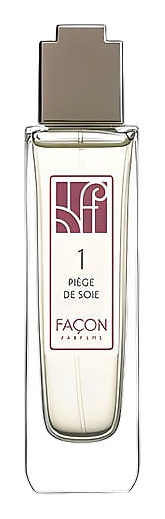
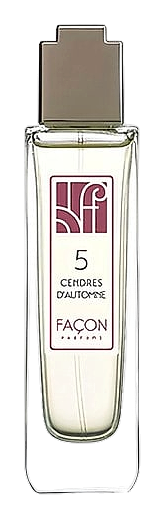
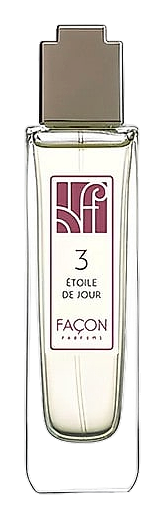
Parfums de Folleville was founded in 2013 in Shanghai, according to the house's own account of its origins. This origin gives the brand a dual cultural character that separates it from perfume houses established solely in France. The name Folleville evokes a French village, while the fragrances draw on a visual and poetic vocabulary shaped by Shanghai and the broader Asian context. The early catalogue arrived in 2016 with Cendres D'Automne, Etoile De Jour, Piegé de Soie, Bouquet Des Sèves and Miroir De L'Air. Jeunesse Du Temps and Matin D'Opale also belong to this first phase of the house's catalogue. Two later scents, Velours De Nuit and Jour De Gloire, appeared in 2021, marking the most recent releases in the available fragrance record. The house has remained associated with Shanghai since its founding, while presenting itself through French perfume culture and poetic naming. Independent fragrance databases document the collection and its release years, but the supplied research does not identify a founder by name, nor does it establish the precise circumstances behind the brand's creation. The story is therefore best understood as one of place, language and atmosphere: a perfume house born in Shanghai in 2013, developing a catalogue in which French names and Eastern imagery meet. Its relatively compact list of ten recorded fragrances gives the house a recognisable identity without revealing the commercial details of the company itself. Parfums de Folleville approaches fragrance as an evocation rather than a literal reconstruction of a place or object. Its titles turn scent into a scene: autumn ash, morning opal, a tiger of light, daylight, a silk trap, a bouquet of sap, youth, night velvet, glorious day and a mirror of air. This vocabulary suggests a focus on atmosphere, visual impressions and the emotional register of a moment. The house's Shanghai origin adds another layer to that method. Rather than describing the city through obvious symbols alone, it works through textures, reflections, natural elements and contrasts between darkness and light. French names give the compositions a cultured, editorial frame, while the imagery opens room for interpretation. This is especially clear in titles that place a domestic or familiar object beside something less tangible, such as Piegé de Soie and Miroir De L'Air. The fragrances are not presented here through a documented ingredient list or a formal manifesto, so their precise olfactory themes cannot be independently stated. Still, the naming pattern reveals a consistent creative instinct: each perfume appears to begin with an image, a sensation or a poetic premise. The result is a house with a clear narrative identity, one in which fragrance serves as an atmospheric medium rather than simple accessory.