








Heritage
A house, in its own words
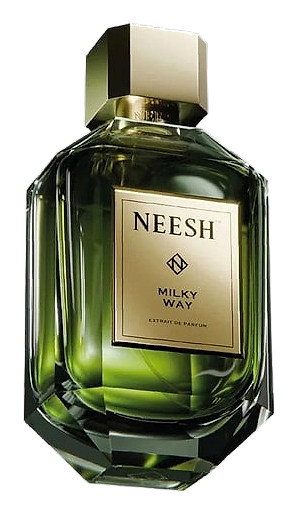
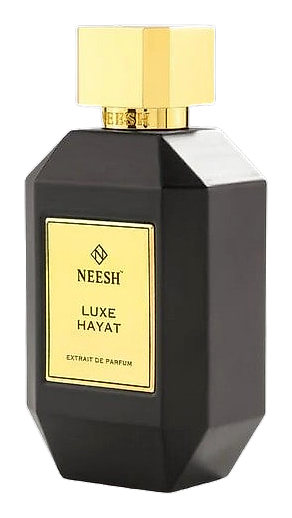
The story of Neesh Perfumes begins in 1904, in the Punjab region of what was then undivided India. F. Chand, a jeweller known for serving the royal families of Punjab, was reportedly presented with a rare quantity of ambergris, an oceanic secretion long prized in perfumery and rarely available inland. According to multiple independent profiles of the brand, Chand became captivated by the material and began crafting bespoke fragrances for his royal clientele, laying the foundation for a family connection to scent that would outlive the original workshop by more than a century. The early years of the house remained tied to bespoke work rather than commercial production. As the political landscape of the Indian subcontinent shifted through the twentieth century, the original Chand perfume enterprise gradually wound down, and the practice became dormant for decades. The brand's own communications describe this as a hiatus rather than a conclusion, with the original ambergris-rooted sensibility preserved as family memory rather than formal archive. In 2019, the Neesh label was re-established as a contemporary perfume house. The relaunch positioned Neesh within a growing Indian niche-fragrance movement, one that sought to develop local perfume houses capable of competing with imported Gulf, French, and Italian labels on the domestic market. The re-established house chose to anchor its identity in the Punjab story, using the 1904 founding date and the jeweller-to-royalty narrative as the backbone of its heritage messaging. Since the 2019 relaunch, Neesh has expanded rapidly into a catalog that includes Milky Way (2020), a gourmand composition, followed by a cluster of releases in 2024 covering Tobacco Vanilla, Mehr, Shafran, Haute Tobacco, Luxe Hayat, Luxe Aoud, and Cologne Sophistique. Tsunara is slated for 2026. The pace of release and the breadth of stylistic territory covered suggest a young house still in the process of defining its signature register, while drawing on a longer story for credibility. Neesh approaches perfumery as a dialogue between subcontinental sensibility and European technique. Rather than positioning itself as an Eastern house or a Western one, the brand works with a roster of perfumers trained in the French tradition, including Christian Provenzano, Christophe Raynaud, Kevin Mathys, Olaf Larsen, and Nanako, and asks them to compose with materials that have deep roots in South Asian and Middle Eastern perfumery: oud, saffron, tobacco leaf, rose, and rich ambroxan bases. The creative direction reflects a specific reading of the Indian fragrance market. Where Gulf houses have historically dominated the oud and mukhallat categories in India, Neesh positions its work as more wearable for daily tropical use, with compositions calibrated for heat, humidity, and the projection expectations of younger Indian consumers. The 2024 slate, which includes the floral Mehr, the saffron-led Shafran, the gourmand Milky Way, and the tobacco-driven Haute Tobacco, demonstrates an intent to span occasions from casual daytime to formal evening. There is also a clear interest in the gourmand register that has defined much of the global niche conversation of the early 2020s. Milky Way, one of the brand's most discussed compositions, sits firmly in that territory. By placing confectionery-leaning work alongside traditional raw materials like aoud and saffron, Neesh signals that its heritage is a starting point rather than a constraint, and that the house intends to participate in contemporary trends while retaining a distinct geographic identity.