




The Heritage
The Story of Majid Muzaffar Iterji
Majid Muzaffar Iterji is a Saudi Arabian perfume house that traces its roots to the mid‑1950s. The family‑run business began near the Sacred House of Mecca, where the first batches of pure, natural oils were distilled for local customers. Over the decades the brand has built a catalogue that includes more than eighty fragrances, ranging from classic oud blends to modern eau de parfums such as Amjad (2008) and Rouh Al Amber (2007). Today the house continues to supply amber, agarwood and musk oils to retailers across the Gulf region, while keeping its production anchored in the traditions of its founders.
Heritage
The story of Majid Muzaffar Iterji starts with Sheikh Mohammed Al‑Atarji, a well‑known perfume merchant in Saudi Arabia during the early twentieth century. Historical accounts note that his stall operated close to the Sacred House of Mecca, where pilgrims bought scented oils for personal use and religious rituals. In 1955 the family formalised the trade, establishing a workshop that focused on extracting 100 % pure natural oils from amber, agarwood and musk. The early years relied on small‑scale copper stills and hand‑pressed extraction, a method that preserved the raw character of the raw materials. By the 1970s the workshop expanded its capacity, adding stone‑ground mills and a dedicated storage cellar that maintained a stable temperature for aging oud blends. The 1990s saw the launch of the first branded fragrances, including Dehn Oud Mubakhar (2006) and Black Musk – Musk KL, which introduced the house to a broader market beyond the holy cities. In 2008 the brand released Amjad Eau de Parfum and Cambode Moattaq Parfum, signalling a shift toward modern perfume structures while retaining the core emphasis on natural ingredients. The 2010s brought a series of limited‑edition oud oils such as Super Sultani Agarwood oil (2014) and a renewed focus on exporting amber and agarwood to Europe and the United States. Throughout its history the company has remained family‑owned, with each generation adding technical knowledge and market insight while respecting the original commitment to purity and locality.
Craftsmanship
Production at Majid Muzaffar Iterji begins with sourcing raw materials from established growers in Oman, Yemen and India. Agarwood logs are harvested during the rainy season, then air‑dried for several months to develop resinous veins. Amber is collected from the Gulf coast, where it is cleaned and sorted by color and grain. The house purchases these inputs from certified suppliers who provide documentation of sustainable harvesting practices. Once received, the materials undergo a cold‑press or steam‑distillation process that the family has refined over generations. Copper alembics, still in use for the first half of the twentieth century, remain part of the workflow for small‑batch oud distillation, allowing the distiller to monitor temperature closely and prevent overheating that could scorch delicate aromatics. After extraction, the oils are transferred to glass containers and stored in a climate‑controlled cellar where temperature stays between 18 °C and 22 °C and humidity remains low. This environment encourages the natural maturation of the scent, a period that can last from six months to two years depending on the ingredient. Quality control includes organoleptic testing by senior perfumers who assess clarity, balance and longevity. Any batch that shows off‑notes or oxidation is set aside for re‑blending or discarded. The final products—whether bottled oud oil, amber tincture or eau de parfum—are filled by hand into amber‑tinted glass to protect the fragrance from light, then sealed with a simple metal cap that bears the family crest. This hands‑on approach ensures that each bottle reflects the same level of care that the raw material received at the source.
Design Language
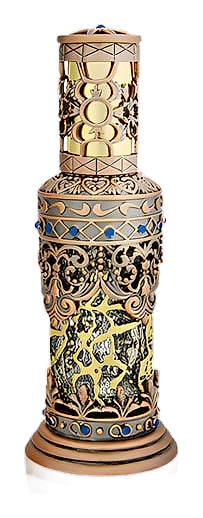
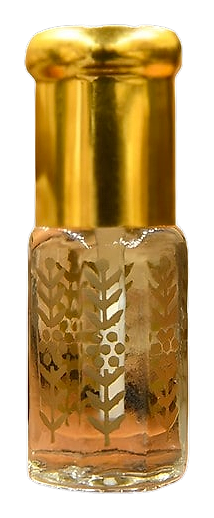
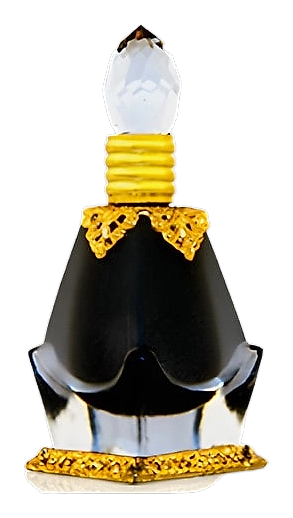
The visual language of Majid Muzaffar Iterji mirrors its commitment to simplicity and natural purity. Bottles are typically crafted from clear or amber glass, allowing the color of the oil to become the focal point. Caps are unadorned metal pieces, often brushed or matte, that avoid decorative flourishes. Labels feature Arabic calligraphy rendered in a modest serif typeface, accompanied by the brand name in both Arabic and English. The color palette leans toward earth tones—deep browns, muted golds and soft creams—that echo the hues of agarwood, amber and musk. Packaging boxes are made from recycled cardboard, printed with a single line of text describing the fragrance family. In retail settings the brand displays its products on wooden trays, reinforcing a tactile, grounded atmosphere. Marketing imagery, when present, shows the raw ingredients—chunks of agarwood, raw amber stones, fresh blossoms—rather than stylized models, underscoring the house’s focus on material authenticity.
Philosophy
Majid Muzaffar Iterji frames its creative vision around the idea of authenticity. The house believes that a fragrance should reflect the scent of its source material without excessive alteration. This principle guides the selection of raw ingredients, the decision to avoid synthetic substitutes, and the choice to let natural accords develop over time. The brand values transparency, so it discloses the botanical or animal origin of each component whenever possible. It also respects the cultural context of perfume in the Arabian Peninsula, where scent plays a role in hospitality, worship and daily life. By combining traditional extraction techniques with modest modern equipment, the house seeks a balance between heritage and practicality. The philosophy extends to customer interaction: the company encourages buyers to experience each oil in its pure form before blending, reinforcing the notion that perfume is a personal, tactile experience rather than a purely visual commodity.
Key Milestones
1955
Family establishes the first workshop near the Sacred House of Mecca, beginning formal production of natural oils.
1970
Installation of stone‑ground mills and temperature‑controlled cellar expands capacity for oud aging.
2006
Launch of Dehn Oud Mubakhar, marking the brand’s entry into modern fragrance retail.
2008
Release of Amjad Eau de Parfum and Cambode Moattaq Parfum, introducing contemporary scent structures.
2014
Introduction of Super Sultani Agarwood oil, a limited‑edition oud aimed at international collectors.
2020
Family opens an export channel to Europe and North America, supplying raw amber and agarwood to niche perfumers.
At a Glance
Brand profile snapshot
Origin
Saudi Arabia
Founded
1955
Heritage
71
Years active
Collection
1
Fragrances released
Avg Rating
2.0
Community sentiment
Release Rhythm


