Heritage
A house, in its own words
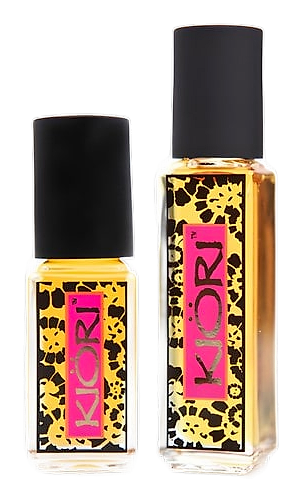
KIÖRI belongs to a generation of niche fragrance houses that emerged alongside the expansion of independent perfumery in the 2010s, a period when fragrance discovery moved beyond established names and towards smaller labels with distinct identities. The name itself points towards a Nordic sensibility, a reference often used in modern fragrance to suggest clarity, restraint, and a close relationship to nature, though the house's own founding story, location, and founder are not verifiable in the material available here. That absence matters. Many contemporary niche houses build their reputation through detailed storytelling, yet KIÖRI's most legible legacy rests on the fragrance itself rather than on a publicly documented corporate history. The 2014 release of KIORI anchors the brand within that decade's moment of creative experimentation, when oud, amber, and aromatic compositions were being reinterpreted for a new audience. The fragrance's name, which simply repeats the house's name with a slight typographic distinction through the umlaut, suggests a house comfortable letting one composition carry its identity. The wider context for KIÖRI is a fragrance landscape in which established houses such as Houbigant, operating since 1775, and Creed, founded in London in 1760, had long defined European perfumery, while newer independent brands were rewriting how perfume could be presented and discovered. Against that backdrop, KIÖRI reads as a smaller, more focused proposition. Its heritage is best understood not through a documented chronology but through the durability of a singular, well-recognised scent. KIÖRI's creative identity is communicated first through its name and through the presentation of its central fragrance. The use of a Nordic-looking word as both house and scent name signals a particular kind of fragrance sensibility: one that prizes clarity over decoration, atmosphere over spectacle, and a sense of place over ornament. That is an interpretive reading of the brand's naming rather than a quotation of an official manifesto, and the house does not appear to publish a widely documented statement of intent. Even so, the design logic is consistent. By naming the fragrance KIORI, the house makes the scent its signature, a decision that implies conviction in a single composition rather than a sprawling catalogue. The restrained typographic treatment, with the umlaut set as part of the wordmark, reinforces this economy of expression. There is a quietness to KIÖRI that feels at odds with the more theatrical language of contemporary perfume marketing. Where many houses describe their work through inherited craft and royal patronage, KIÖRI's identity rests on elemental suggestion and minimal presentation. For a fragrance discovery platform, this makes KIÖRI a case study in focused branding: the fragrance and the name do the work that other houses delegate to heritage narratives and ingredient hyperbole. The philosophy is therefore best read as one of concentration, letting a single idea define the house.