Heritage
A house, in its own words
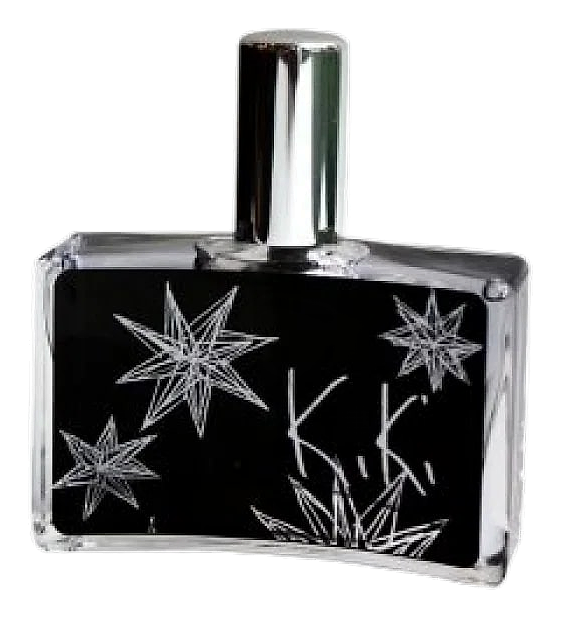
Kiki Smith first gained recognition in the 1980s as part of a generation of New York artists who pushed sculpture beyond traditional materials, working with glass, wax, paper, and ceramic to explore the human body, mortality, and the natural world. Her practice spans sculpture, drawing, printmaking, and tapestry, with major exhibitions at institutions including the Guggenheim Museum, where she debuted in 2009. Smith's entry into fragrance grew from a long-standing curiosity about scent as a medium. When she approached perfumer Christophe Laudamiel about collaborating, she described what she wanted with characteristic directness: she asked for a fragrance that captured the idea of "plant sex." That brief, equal parts irreverent and poetic, set the tone for what became a single-author fragrance project rooted in her artistic vocabulary rather than commercial perfumery conventions. The collaboration marks a rare instance of a fine artist treating scent as another sculptural material, an invisible extension of the bodily and ecological themes that have defined her work for four decades. Though the fragrance house operates without the institutional weight of an established perfume brand, it carries the credibility of an artist whose work is held in major museum collections worldwide. Smith approaches fragrance the way she approaches sculpture, as a way to give form to processes that are usually invisible. Her art has long examined cycles of birth, decay, and regeneration, and her fragrance project extends that inquiry into the chemical and sensory. The request for "plant sex" was not provocation for its own sake. It was a precise conceptual brief: capture pollination, fecundity, and the restless intelligence of botanical life. What sets this house apart from artist-driven fragrance collaborations is the degree of authorial control Smith retained. She did not license her name to a perfume house or approve a formula presented to her. She worked directly with a perfumer she chose, articulating her vision in her own terms and engaging with the iterative process of composition. The result is a fragrance that reads as an extension of her studio practice rather than a translation of it. This philosophy places the house in an unusual position between fine art and independent perfumery. It does not operate as a commercial brand in the traditional sense, and it does not present itself as a conceptual art project either. It sits in the space where a sculptor's sensibility meets the technical demands of fine fragrance.