


Heritage
A house, in its own words
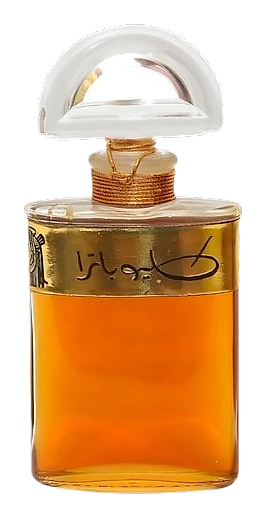
Publicly available detail on Kesma's founding is sparse, which itself shapes the brand's profile as a quieter presence on the niche circuit. The house's catalog is organized around distinct signature compositions released across a span of decades rather than around annual launches, a structure more typical of earlier twentieth century perfume houses than of modern digital-first brands. Among the listed compositions, Cleopatra (1983) is the most recent datestamped title, while Cairo (1960), Iseberg (1960), and Serenade (1960) cluster tightly in the early 1960s, suggesting a concentrated creative period during that decade. Effluve (1980) extends that productive arc into the next generation. The numerical year-stamping convention itself is part of the house's identity, lending each bottle a quasi-archival feel, as though one were pulling a numbered artifact from a perfumer's working drawer. Without a public founder biography or press archive to confirm exact dates, the timeline below sticks to what can be reasonably asserted from the catalog itself, framed with appropriate caution. Kesma's creative positioning leans toward narrative over novelty. Every listed composition is anchored to a proper name or a scene: a city (Cairo), an object or landscape (Iseberg), a historical figure (Cleopatra), a musical cue (Serenade), an abstract aromatic gesture (Effluve). This is perfumery pitched as storytelling, where the title functions as the first accord, and the juice is expected to deliver on that opening promise. The house appears to favor moods that sit between romance and intrigue rather than straightforward freshness or mainstream gourmand territory. The year-stamping convention reinforces a sense of occasion, each release positioned as a fixed point in time rather than a seasonal drop. For the wearer, the implicit invitation is to choose a fragrance the way one might choose a film or a piece of music, by the feeling it promises before knowing exactly what notes await.