



Heritage
A house, in its own words
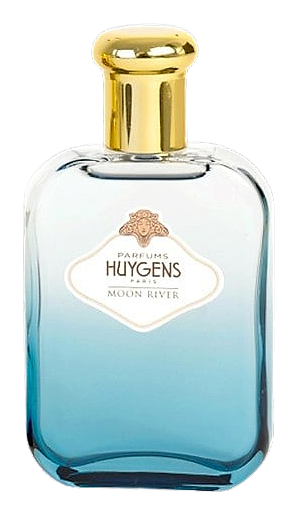
The brand takes its name from Constantijn Huygens (1596 to 1687), a Dutch diplomat, poet, and polymath who maintained a personal recipe book containing around 150 perfume formulas. He is not the founder of a commercial perfume house in the modern sense; rather, he was a historical figure whose private writings became the creative anchor for the brand decades later. The contemporary fragrance label Huygens emerged from a collaboration between perfumer Marypierre Julien and the Huygens Institute for the History of the Netherlands. Working from Constantijn Huygens's preserved recipes, the project set out to interpret centuries-old formulas for a modern audience. Le Parfum Originel, launched in 2016, was the direct result of this scholarly partnership and is based on a formula attributed to Constantijn Huygens himself. This approach positions the brand at a rare intersection of historical research and contemporary perfumery. Rather than inventing a fictional heritage, Huygens draws on a real archival source, a real Dutch figure, and a real institutional partnership. The resulting body of work functions almost as olfactory translation, carrying the sensory ambitions of the Dutch Golden Age into the present day. Huygens operates on the principle that historical recipes deserve to be experienced, not merely archived. The brand treats fragrance as a form of cultural memory, working from documented formulas rather than abstract inspiration. This gives each scent a specific origin point, a particular hand, and a particular moment in time. Collaboration with historians and cultural institutions sits at the center of the creative process. The brand's work with the Huygens Institute reflects a commitment to academic rigor as part of artistic practice, suggesting that faithful reconstruction requires more than aesthetic intuition. Marypierre Julien, the perfumer behind Le Parfum Originel, approached the project as an act of interpretation rather than invention. The philosophy also values restraint. With a relatively small catalog, the brand prioritizes depth over breadth, allowing each composition to emerge from a clearly defined concept. Whether interpreting a 17th-century formula or developing a newer piece like Moon River, the underlying approach remains consistent: treat scent as a vessel for something specific, whether that something is a historical document, a place, or an emotion.