







Heritage
A house, in its own words
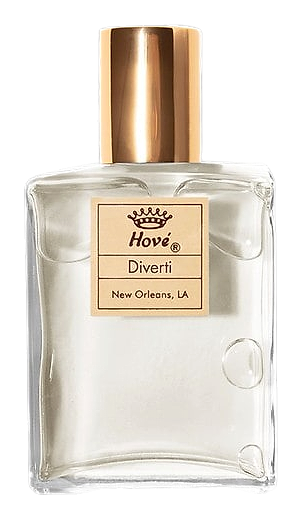
Hové Parfumeur traces its story to 1931, when Mrs. Alvin Hovey-King founded the perfumery in New Orleans. Independent accounts describe Hové as the city's oldest continuously operating perfumery and emphasize that the company remains family owned. Hovey is said to have learned the craft of perfumery from her Creole French mother, an origin story that connects the house to the layered French and Creole traditions that shape New Orleans. The business operates from a historic building in the French Quarter, reportedly dating to 1809. Rather than presenting its history as a frozen museum piece, Hové continues to make perfume in the same city and has developed a recognizable collection of fragrances tied to Louisiana life. Names such as Bayou D'Amour, Belle Chasse, and Habanera evoke specific New Orleans surroundings and moods, while Louis Quatorze recalls the city's French royal history. The house's survival across more than nine decades reflects both the continuity of family ownership and a sustained local interest in made-in-New Orleans fragrance. Its heritage is therefore intimate and geographic: one family, one old quarter, and a perfume practice shaped by the culture of the city around it. Hové's creative direction begins with New Orleans itself, where French, Spanish, Creole, African American, and Gulf Coast influences meet. The house's fragrances use place and atmosphere as central creative devices. Bayou D'Amour suggests the romance of the waterways and wetlands outside the city, while Belle Chasse draws on the river landscape associated with a Plaquemines Parish community east of New Orleans. Heliotrope, carnation, patchouli, and other floral or herbaceous materials also reflect the language of traditional European perfumery filtered through a Southern setting. The approach is personal rather than dictated by a formal house manifesto. Hovey's reported training by her Creole French mother gives the business a lineage rooted in inherited craft and family memory. At the same time, the breadth of the range, from close floral portraits to deeper patchouli and smoke effects, shows an interest in mood and identity. Hové perfumes feel most coherent when understood as olfactory chapters of a place. They do not merely reproduce New Orleans as a decorative theme. They turn its streets, water, vegetation, architecture, and history into fragrances that can be worn.