




The Heritage
The Story of Haas Parfum
Haas Parfum creates limited‑edition scents that reference specific places, historic moments or personal narratives. Each fragrance bears a numeric label and a subtitle that hints at its inspiration, from a German chateau garden to a distant desert oasis. The brand releases a handful of bottles each year, allowing collectors to explore a curated olfactory library that feels both intimate and adventurous. Haas Parfum’s approach balances tradition with a contemporary curiosity, inviting wearers to experience a story through scent.
Heritage
The house emerged in the early 2000s in Schwetzingen, a town known for its baroque palace and gardens. The first releases, No.1 Eau de Château de Schwetzingen and No.2 Le choix de Stephanie, appeared in 2002 and introduced a concept of numbered editions tied to a narrative context. Over the next decade the brand expanded its catalogue with scents such as No.3 La Fin du Monde (2005) and No.5 La femme de Candide (2009), each anchored in a distinct theme. In 2014 the line added No.7 Ma Liberté, a composition that celebrated personal freedom and marked the brand’s tenth anniversary. Throughout its development Haas Parfum has maintained a small‑batch production model, limiting each release to a few thousand units. This strategy stems from the founders’ desire to keep quality control tight and to preserve the sense of rarity that defines the collection. The house has never pursued mass‑market distribution; instead it sells directly through its website and a curated network of boutique retailers across Europe and North America. By 2022 the brand had issued more than a dozen numbered fragrances, each accompanied by a short booklet that explains the inspiration, the chosen ingredients and the intended mood. The continuity of the numbering system provides a clear lineage, allowing collectors to trace the evolution of the house’s scent palette from early citrus‑green accords to later, more complex oud and amber compositions. Haas Parfum’s history reflects a deliberate, measured growth that prioritises artistic integrity over rapid expansion.
Craftsmanship
The production process begins in a modest laboratory in Schwetzingen, where a small team of perfumers experiments with raw materials sourced from Europe, the Middle East and Southeast Asia. Natural extracts such as French lavender, Italian bergamot and Indian sandalwood arrive in sealed containers, while synthetics are ordered from reputable manufacturers in France and Germany. Each ingredient undergoes a quality check that includes gas‑chromatography analysis to confirm purity. Once the formula is finalized, the blend is macerated in stainless‑steel vats for a period that ranges from two weeks to three months, depending on the complexity of the composition. The house favors a low‑temperature distillation technique for delicate floral notes, preserving their nuance. After maceration, the perfume is filtered through a series of fine membranes to remove any particulate matter. The final liquid is then transferred into hand‑blown glass bottles that are sealed with a screw‑top cap made from recycled aluminum. The bottling line operates on a batch‑by‑batch basis, allowing the team to monitor each step and adjust parameters as needed. Quality control includes blind scent panels that evaluate consistency across batches; any deviation triggers a reformulation before the product reaches the market. The brand also documents the provenance of each raw material, providing traceability that satisfies both regulatory standards and the expectations of discerning consumers. By integrating traditional craftsmanship with modern analytical tools, Haas Parfum ensures that every edition delivers a stable, authentic olfactory experience.
Design Language
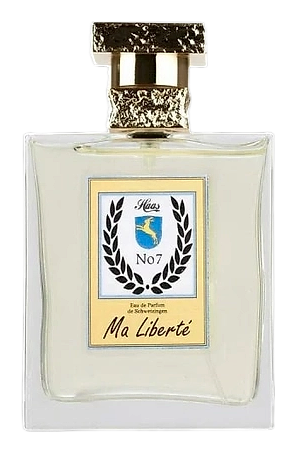
Visually, Haas Parfum adopts a minimalist palette that lets the scent take center stage. The bottles feature clean, rectangular silhouettes with subtle curvature at the base, echoing the architectural lines of the Schwetzingen palace. Labels are printed on matte white paper, displaying only the numeric designation, the subtitle and a small typographic emblem that varies with each edition. The typography uses a classic serif font, reinforcing the brand’s nod to heritage while remaining legible. Caps are finished in brushed metal, providing a tactile contrast to the smooth glass. The packaging box mirrors the bottle’s simplicity: a rigid, off‑white carton with a single strip of color that hints at the fragrance’s dominant note—emerald for green accords, amber for warm woods, deep blue for marine inspirations. Inside, a folded card offers the story behind the scent, printed on recycled paper with a soft-touch finish. The overall visual language avoids excessive ornamentation, focusing instead on proportion, material quality and subtle cues that align with the narrative of each perfume. This restrained aesthetic has earned the brand mentions in design‑focused publications, which note the harmony between form and function in the presentation of the fragrances.
Philosophy
Haas Parfum views fragrance as a narrative medium rather than a mere product. The creators believe that a scent can evoke a memory, a place or an emotion with the same precision as a photograph. To achieve this, they start each project with a written story, then translate that narrative into a scent profile. The brand values transparency, so every bottle includes a brief essay that outlines the inspiration, the key ingredients and the intended atmosphere. Sustainability also informs their decisions; they source natural raw materials from certified farms and prioritize recyclable packaging. While the house embraces modern synthetics when they serve the story, it remains respectful of traditional extraction methods, especially for ingredients such as natural oud, ambergris substitutes and rare botanicals. The philosophy stresses a personal connection: the wearer is invited to become part of the story, to interpret the fragrance through their own experiences. This user‑centric outlook shapes the brand’s limited‑edition releases, each of which aims to spark conversation rather than simply fill a market niche.
Key Milestones
2002
Launch of Haas No.1 Eau de Château de Schwetzingen and No.2 Le choix de Stephanie, establishing the numbered edition concept
2005
Release of Haas No.3 La Fin du Monde, the first fragrance to explore an exotic, non‑European theme
2009
Introduction of Haas No.5 La femme de Candide, featuring a literary reference and a shift toward softer floral accords
2014
Haas No.7 Ma Liberté debuts, marking the brand’s tenth anniversary and expanding the collection to include oud‑based compositions
2018
The house opens a dedicated boutique in Berlin, offering private consultations and limited‑edition releases
2022
Haas Parfum celebrates its 20th year with a retrospective exhibition that showcased original scent notebooks and prototype bottles
At a Glance
Brand profile snapshot
Origin
Germany
Founded
2002
Heritage
24
Years active
Collection
1
Fragrances released
Avg Rating
3.4
Community sentiment
Release Rhythm


