


Heritage
A house, in its own words
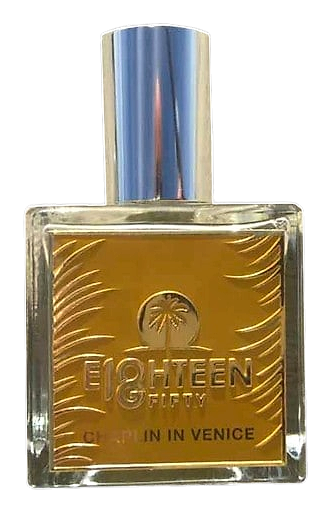
Eighteen Fifty Parfums appears to be a contemporary fragrance house rather than a historic maison, with the earliest releases in its documented catalogue dating to 2017. The name suggests 1850 as a point of reference, but the available research does not establish a founding story, a founder, or a confirmed link to an event that took place in that year. That distinction matters because much of the supplied material concerns older perfume houses, including Houbigant and L'Artisan Parfumeur, rather than Eighteen Fifty Parfums itself. The verifiable history begins with the launch period of its first recorded fragrances. Chateau, La Jolla, and Chaplin In Venice are dated to 2017, while The Black Dahlia followed in 2018. Public fragrance listings describe the brand as having four perfumes in its catalogue and place its beginnings in 2017. No independently sourced evidence in the available material identifies an earlier house, predecessor, or long-running series of releases. For now, Eighteen Fifty Parfums is best understood as a concise, story-led label that emerged in the late 2010s and built its initial identity around four named compositions. The clearest expression of Eighteen Fifty Parfums' philosophy comes from the names of its fragrances. Chateau evokes a residence or setting, La Jolla points to the California coastal city, Chaplin In Venice recalls a figure and place through cinema history, and The Black Dahlia draws on the final painting of Edgar Allan Poe's story. Together, these titles suggest that scent is being used as a route into memory, place, culture, and narrative. The approach favors immediacy and imagination over a conventional fragrance-family classification. Rather than presenting each perfume only through ingredient lists or mood words, the house gives it a distinct reference point that can shape the wearer's expectations and interpretation. This is especially notable in Chaplin In Venice, whose title combines a recognizable cultural figure with a specific European city. The label's small number of releases also supports a deliberate curatorial character. The available sources do not confirm a formal manifesto, a named creative director, or a detailed statement of sourcing and production principles, so those elements should not be inferred. What can be said with confidence is that Eighteen Fifty Parfums has chosen evocative titles and brief release histories that place storytelling at the center of fragrance discovery.