
The Story
Why it exists.
The beginning
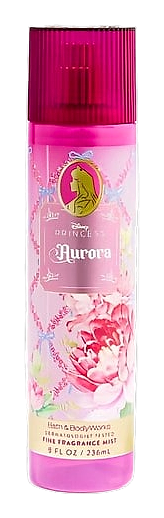
Aurora is named for the Disney Princess whose kindness is her superpower. Not the dramatic kind, the kind that shows up quietly, without needing a spotlight. The Bath & Body Works creative team wanted to bottle that feeling: warmth without sweetness, grace without effort. The result is a fragrance that reads as soft, feels as warm as afternoon light, and carries a shimmer that lingers long after you've left the room. Created by Céline Barel and Jean-Marc Chaillan, this is the Disney Princess Collection at its most considered, aspirational without trying too hard.
Rose and sandalwood is a pairing that could go obvious fast. The trick here is the balance: the rose doesn't shout, it breathes. The sandalwood doesn't dominate, it warms everything around it. Then there's the fairy dust, a sparkling, slightly gourmand quality that lifts the whole composition into something dreamy. It's what separates Aurora from every other sweet floral in the shelf. The powdery warmth in the drydown isn't an accident. It's the point.
The evolution
The opening arrives like the first light through a window, soft, immediate, warm. Rose petals without the thorns. A shimmering quality threads through the top notes, almost sugared, almost magical. Within thirty minutes, the rose deepens as sandalwood arrives to hold it steady. The composition shifts from delicate to intimate. The drydown is where Aurora earns its name. Powdery warmth settles close to the skin, the sandalwood creamier now, the rose fading into a quiet echo. This is the phase that surprises most people, it lasts. A full workday on most skin types, sitting close and comfortable rather than announcing itself. The next morning, there's a trace of soft wood and powder at the wrist.
Cultural impact
Aurora stands out in the Disney Princess Collection as the most refined option in what is otherwise a body-mist-forward lineup. The reviews are consistent: this smells like a proper perfume. It projects. It lasts. That quality gap, between the collection's everyday format and the sophistication of the scent itself, is what makes Aurora interesting. It's proof that a mass-market brand can produce something that earns comparison to niche compositions. The 2026 launch arrives at a moment when consumers are increasingly skeptical of luxury pricing, and more willing to trust brands that have earned loyalty over decades. Aurora is part of that argument. Not by claiming to be something it isn't, but by simply being very good at what it does.