Nic Mastenbrœk
Nic Mastenbrœk occupies an increasingly rare space in contemporary perfumery: the practitioner who welcomes scrutiny. Rather than guarding the craft behind mystique, Mastenbrœk has stepped forward as a public educator, hosting Q&A sessions that pull back the curtain on how professional fragrance composition actually works. The path to that kind of confidence typically runs through seven years of intensive study, often rooted in chemistry, where aspiring perfumers learn to decode materials not just through smell but through molecular understanding. Mastenbrœk appears to have followed that rigorous route, emerging not just as a creator but as someone comfortable explaining the science beneath the art to curious audiences. The decision to go public with that knowledge sets a certain tone about how Mastenbrœk approaches the profession: perfume as craft worth discussing, not proprietary secret. This educator's instinct suggests someone who values the conversation around fragrance as much as the fragrance itself. Mastenbrœk's work with SokiLondonEU points to collaborative instincts, too, building bridges between creation and community rather than working in isolation. Whether in a studio or in front of a camera, Mastenbrœk seems driven by the belief that better-informed enthusiasts make for a healthier fragrance culture overall.
The hits
Notable creations
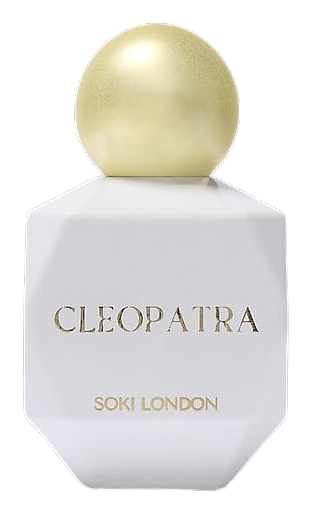
The signature
How Nic composes
While concrete details about Mastenbrœk's signature materials remain limited, the educational approach to perfumery offers clues about working style. Someone who teaches the craft likely possesses deep material knowledge, the kind that comes from understanding ingredients at a molecular level rather than simply memorizing combinations. That suggests disciplined, systematic creativity: building compositions with intention rather than accident. The collaborative nature of recent work, engaging directly with audiences and other creators, hints at adaptability and perhaps an eclectic sensibility open to different directions. Mastenbrœk's style may resist easy categorization precisely because curiosity and communication seem to drive the work. Without established releases to analyze, the approach remains open-ended, but the evidence points to someone who values both technical precision and accessibility in equal measure.
Philosophy
What drives Nic
For Mastenbrœk, perfumery appears to function best as an open practice rather than a closed ritual. That willingness to discuss the mechanics of composition publicly implies a philosophy where understanding enhances appreciation rather than diminishing it. There is something democratic in that approach: refusing to gatekeep the how and why of fragrance creation. The questions fielded in those Q&A sessions likely reveal what Mastenbrœk values most about the craft's complexity, that the science underneath the emotion matters as much as the final experience. This suggests a creator who thinks in layers, who considers both the intuitive and analytical sides of their work equally valid. Mastenbrœk seems to believe that stripping away some of perfumery's built-in mystery does not rob it of magic but rather adds a different kind of appreciation for the artistry involved. Transparency, it appears, is not the enemy of romance in Mastenbrœk's world.
The houses
Maisons Nic composes for
In the same league