Mohammed Ne'emah
Mohammed Ne'emah grew up surrounded by scent. In his family home in Kuwait, glass flacons reserved for weddings and milestones lined the shelves, a private archive that quietly shaped his sense of what fragrance could mean. By seventeen, he had turned that inheritance into a trade, selling fragrance on his own terms and learning the rhythm of the business long before he ever built a house of his own. In 1997, he founded Ne'emah, a French-Oriental label pitched at the rarefied end of the market, where every bottle is treated as a small object of luxury rather than a commodity. He splits his time between Kuwait and Dubai, running the brand as founder and general manager, and remains closely involved in composition rather than ceding that role entirely to a lab. The result is a house built on a single sensibility: his own, refined over more than two decades, and tied to a particular idea of what makes an Arabian fragrance feel both opulent and personal.
The hits
Notable creations
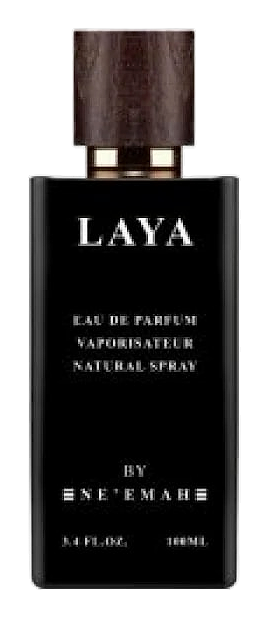
The signature
How Mohammed composes
Ne'emah composes in a register that flirts with indulgence without tipping into excess. His palettes lean on the rich materials the Arab market expects: dense amber, smoky woods, leather, oud when the story calls for it, and resins that lend a long, golden drydown. He counters those weights with brighter accents, rose in its many moods, saffron for warmth, and the occasional flicker of citrus or spice, so the openings feel alive rather than monolithic. Compositionally, he prefers the slow build, allowing a fragrance to move from a luminous top into a dense, almost architectural heart before settling into a base that lingers for hours. The result is the Ne'emah signature: opulent on first acquaintance, intimate on the skin, and unmistakably shaped by his Kuwaiti upbringing and his command of French perfumery codes.
Philosophy
What drives Mohammed
Ne'emah treats fragrance as memory in liquid form, an idea he returns to often and traces back to the bottles of his childhood. He sees perfumery as a way of bottling occasions, capturing the warmth of a gathering, the gravity of a wedding, the quiet after a celebration, and giving them back to the wearer whenever the cap comes off. His work sits at the meeting point of French structure and Oriental generosity, and he resists the idea that one tradition must dominate. Luxury, for him, is not loud display but quiet attention: the difference between a fragrance that announces itself and one that reveals itself. He designs for the wearer who wants their scent to feel personal, layered, and earned rather than borrowed from a trend cycle.
The houses