Maya Njie
Maya Njie arrived in London from Västerås with a background in surface design and photography, trained at the University of the Arts London. She did not set out to become a perfumer. The shift happened gradually, through an accumulated awareness that scents could hold what words and images could not—that fragrance could archive a life. Her Swedish and Senegalese-Gambian heritage informed this instinct. She began experimenting with fragrance as another design material, another surface to work. The practice sharpened into something more intentional. In 2017, she launched her eponymous brand from a Shoreditch studio, building fragrances she described as personal recollections translated into scent. Her work found an audience quickly, finding shelf space at Liberty London and establishing her as a distinct voice in artisanal perfumery. Njie approaches fragrance like a designer: formal, deliberate, concerned with how materials hold together.
The hits
Notable creations

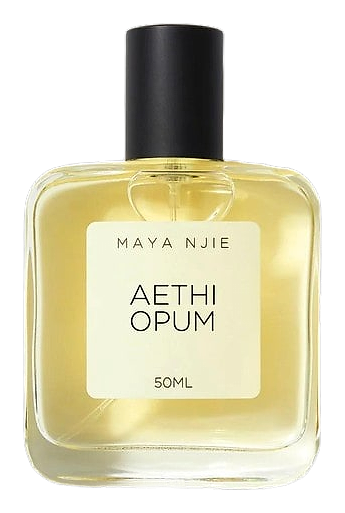



The signature
How Maya composes
Njie's style is intimate and material. Her fragrances feel like objects handled often—worn, not displayed. She favors warm, textured bases: woods, resins, powders. There is an earthiness to her work, a grounded quality that speaks to someone who thinks in surfaces and textures rather than in abstract notes. She trained outside formal perfumery, which shows in her compositions—less concerned with classical structure, more interested in scent as impression. Her background in photography means she sees in layers: foreground, atmosphere, what remains after the subject leaves. She builds fragrances the way she might compose a photograph, considering what is in focus and what should blur. The result is work that feels personal and particular, never generic.
Philosophy
What drives Maya
Njie speaks about scent as a form of preservation. She calls her fragrances souvenirs—objects that carry memory into new contexts, new lives. This is not nostalgia in the sentimental sense. She is interested in what persists: the texture of a place, the emotional residue of an experience, the way a smell can collapse time. Memory grounds her work, but she does not insist on it. She has said she does not necessarily need memory to create—sometimes the impulse is fantasy, a scent that never existed but feels like it should have. The duality matters. Her heritage informs her palette without limiting it. The Swedish and West African threads run through her, but the compositions are not literal translations of identity. They are something more private: the smell of something that happened to her, offered to someone who was not there.
The houses