Dana Schmitt
Dana Schmitt didn't set out to bottle anything. She came to perfumery through chemistry, studying at Princeton before trading textbooks for organ samples and the meticulous cartography of scent. At the start of perfumery school, she committed to memorizing 150 natural materials and 350 synthetics in batches, scribbling notes to herself as she went. That discipline became her foundation. Today, she works as a perfumer at Givaudan, one of the industry's most influential fragrance houses, where she composes scents for global brands and indie labels alike. In 2025, she was named to The Fragrance Foundation's Class of Notables, recognized alongside thirteen other executives for sustained career excellence. She has also been an early voice exploring how AI tools like Givaudan's Carto can support the creative side of perfumery, approaching technology as a collaborator rather than a replacement. She has composed a personal fragrance for her own wedding, a private gesture that says more about her craft than any brief ever could. Her work spans Marc Jacobs, Fulton & Roark, and her own home city of New York, where she continues to build a quietly distinctive portfolio.
The hits
Notable creations

The signature
How Dana composes
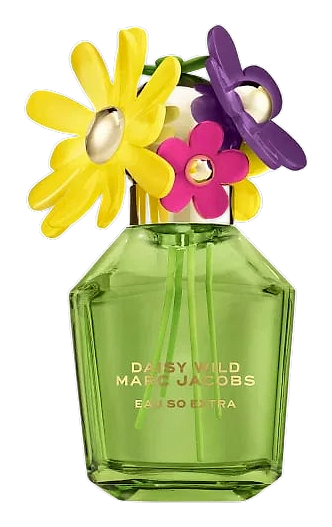
Schmitt favors clean, expressive compositions with a contemporary edge. She gravitates toward natural ingredients treated with a chemist's precision, building scents that read clearly on skin without losing depth. Her portfolio suggests fluency across registers: she can render the bright, effervescent playfulness of Daisy Wild Eau So Extra for Marc Jacobs as fluently as the grounded warmth of Fulton & Roark's Lady Bird. This range is her signature, an ability to move between crowd-pleasing luminosity and quiet, textured comfort without losing her own point of view. She leans on transparent florals, fresh fruits, and soft musks, but treats each as a starting point for surprise rather than a formula to replicate.
Philosophy
What drives Dana
Schmitt sees perfumery as a conversation between intention and instinct, where the brief is only the starting point. She describes her work as bridging indie aesthetics with functional wellness, meeting the modern consumer who wants both art and accessibility in a single bottle. For her, scent is a tool for connection, capable of translating ideas that resist language into something people can carry. She treats each project as its own world, and she resists repeating herself. Her interest in AI-assisted creation, visible in her collaboration with Givaudan's Carto platform, reflects a curiosity about where the craft is headed without sacrificing the human intuition at its core. She believes the best fragrances feel personal even when millions wear them.
The houses