Ash Compton
Ash Compton arrived at perfumery through an unlikely corridor. While training as a Jungian psychotherapist, the son of a family rooted in fragrance making found himself drawn back to the materials he grew up surrounded by. That double life, analyst by day, scent maker by night, became the foundation for Fray Ardens, a niche house based out of Marfa that reads less like a brand and more like a personal journal rendered in aromatics. Compton also curates Editions de Parfums, a project that connects emerging voices with established noses, a fitting role for someone who treats fragrance as a dialogue rather than a product. His practice in Kent, Mood Psychotherapy, feeds directly into his creative work, where mood, archetype, and the unconscious steer each composition. The result is a perfumer who builds from inside out, treating scent less as decoration and more as a language for states of feeling.
The hits
Notable creations
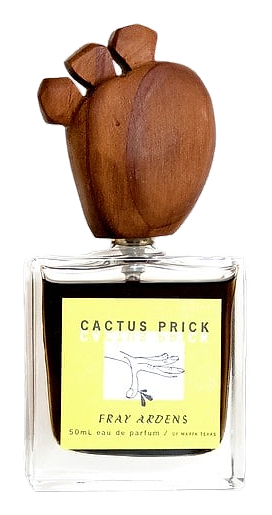
The signature
How Ash composes
Compton works from a deeply personal palette, drawing on materials that carry emotional weight, woods, resins, smoke, herbs with green and bitter edges, and the kind of animalic and mineral notes that reward slow wear. His compositions tend to unfold in chapters rather than move in a single arc, opening with something immediate before retreating into quieter, stranger territory. He favors restraint over spectacle, allowing negative space to do as much work as the ingredients themselves. Where some indie perfumers lean maximalist, Compton tends toward the studied and monastic, closer to a private ritual than a statement piece.
Philosophy
What drives Ash
Compton makes perfume the way some people keep dream journals, with close attention to what surfaces when the conscious mind steps aside. His Jungian training gives him a framework for reading symbols, shadow, and emotional resonance, and he applies it to fragrance with unusual seriousness. Each scent is conceived as a portrait of a mood or an inner figure, built to provoke recognition rather than simply please. He speaks often about collaboration as a creative principle, and Editions de Parfums reflects that belief by pairing newer talents with established perfumers. For Compton, scent is a therapeutic instrument first, an art form second, and a commercial object a distant third.
The houses