Albert Krigler
Albert Krigler was born in Berlin in 1860, a young chemistry student who held his first professional ambitions before the perfume world truly knew his name. He cut his teeth as a chemist at the Rallet Company, widely considered Europe's first modern perfume house, where he absorbed the technical rigor that would define his later work. His personal life intertwined with his professional calling when he fell in love with a perfumer's daughter, a romance that drew him deeper into the craft. In 1904, Krigler struck out on his own, founding his eponymous house and relocating his family to St. Petersburg, where he opened his first atelier. The move placed him at the heart of Imperial Russia's obsession with fragrance, and his creations quickly earned a following among the most discerning noses of the era. His earliest known composition, Pleasure Gardenia 79, dates to 1879 in Moscow and showcased his talent for rendering white florals with botanical precision, blending gardenia and jasmine into compositions that felt both modern and timeless. That duality, the chemist's exactitude married to the artist's romantic sensibility, became the foundation of a dynasty that would endure for five generations.
The hits
Notable creations

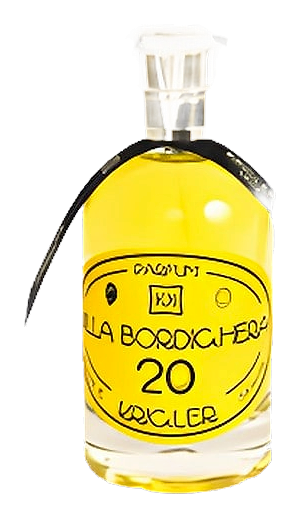
The signature
How Albert composes
Krigler's hand reveals itself through lush, structured florals with crystalline definition, compositions where individual notes remain legible rather than dissolving into abstraction. His Pleasure Gardenia 79, blending gardenia with jasmine, exemplifies his preference for white floral pairings rendered with classical restraint. He gravitated toward ingredients of unmistakable quality, absolutes and essences rather than reconstructed approximations, allowing natural richness to anchor each formula. His time in Russia exposed him to Oriental and spice traditions that occasionally surfaced in his work, adding warmth and resinous depth to his predominantly floral palette. The result was a signature that felt rooted in European perfumery's golden age while carrying an exotic undertone, polished, opulent, and precisely composed.
Philosophy
What drives Albert
Krigler approached perfumery as both science and sentiment, a discipline where molecular knowledge served emotional resonance. Trained in chemistry during an era when the field was still defining itself, he treated raw materials with the seriousness of a botanist and the intuition of a portrait painter. His work in St. Petersburg's imperial circles sharpened his conviction that fragrance should function as a personal signature, something woven into identity rather than applied as decoration. He believed the finest compositions carried historical weight, each bottle a small archive of mood, place, and moment. This philosophy guided his choices around ingredient provenance, favoring materials of verifiable quality and distinctive character over trend-driven novelties.
The houses
Maisons Albert composes for
In the same league