Black Vanilla Bean
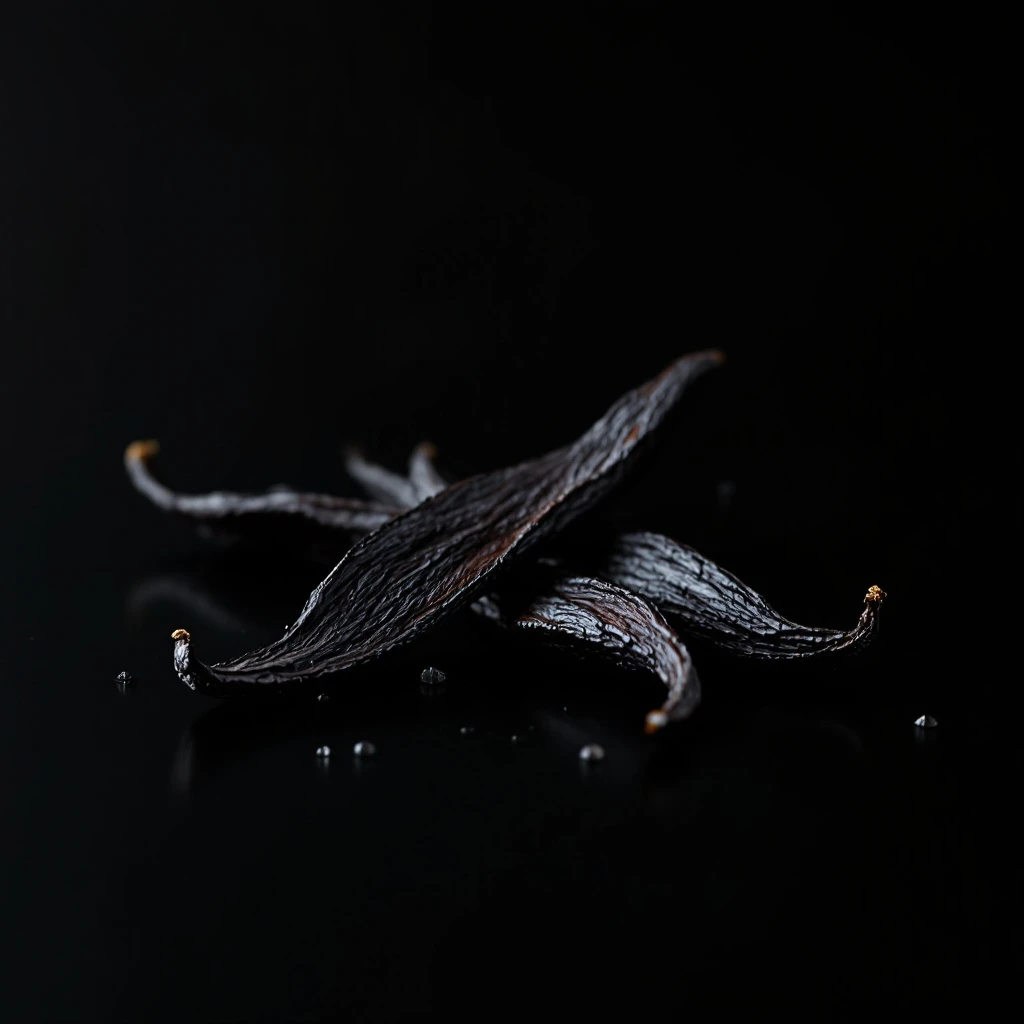
Black Vanilla Bean delivers deep, gourmand sweetness with smoky, resinous undertones. The cured pod husk carries a richer, darker character than standard vanilla extract, adding warmth and sensuality to fragrance compositions.
Character
How it smells
The dark heart of gourmand perfumery
Each vanilla flower must be hand-pollinated within 12 hours of opening. A single orchid bloom lasts less than a day.
Pairs beautifully with
Origin
Madagascar
Vanilla originated in Mesoamerica, where the Totonac people of what is now southeastern Mexico first cultivated Vanilla planifolia around 1100 CE. The Aztecs later prized the beans for flavoring cacao drinks, believing them a gift from the gods.
When Spanish conquistadors carried vanilla to Europe in the 1520s, it remained a luxury reserved for nobility. The spice only became widespread after 1836, when a Belgian botanist discovered the vanilla orchid's unique pollination requirements.
Hand-pollination allowed cultivation beyond Mexico, and vanilla plants eventually reached Reunion Island and Madagascar in the 1840s, where Indian Ocean climate proved ideal. Today Madagascar produces roughly 80 percent of the world's natural vanilla, though each pod still requires individual hand-pollination, making it one of the most labor-intensive crops on Earth.
Wears it best
Fragrances featuring Black Vanilla Bean
Brands
Brands known for Black Vanilla Bean
Good to know
Questions, answered
The essentials on Black Vanilla Bean in perfumery: how it smells, where it comes from, and how it behaves on skin.
Is Black Vanilla Bean synthetic?
No, it is a naturally extracted oleoresin from cured Vanilla planifolia pods. Natural vanilla contains over 300 chemical compounds, while synthetic vanillin replicates only the primary aroma molecule.
What does Black Vanilla Bean smell like?
It carries deep, warm sweetness with dark, slightly smoky, and resinous undertones. The cured husk adds a more complex, less confectionery character than standard vanilla extract.
How does Black Vanilla Husk differ from vanilla absolute?
Vanilla absolute is a alcohol-soluble extract focusing on aromatic compounds. Vanilla husk material retains the pod's fibrous structure and delivers a different tactile and aromatic dimension in formulations.
Which countries produce the best vanilla?
Madagascar dominates production, supplying roughly 80 percent of global output. Comoros, Indonesia, and Uganda produce smaller quantities with varying flavor profiles tied to terroir.
Why does natural vanilla cost more than synthetic alternatives?
Each vanilla orchid flower requires hand-pollination within 12 hours of opening, and pods need six months of daily curing. This labor intensity, combined with weather vulnerability, drives prices far above synthetic vanillin.
Can Black Vanilla Bean work as a base note?
Yes, its rich, persistent dry-down makes it excellent for base note composition. It anchors lighter top and heart notes while providing warmth and depth that lingers for hours.
Is tonka bean the same as vanilla?
No, tonka beans come from Dipteryx odorata, a tree native to South America. They smell similar with coumarin contributing sweet, almond-like facets, but tonka and vanilla are botanically distinct ingredients.
Why does vanilla smell different in perfume than in food?
Perfumers work with extracts and absolutes using different carrier solvents and concentrations than culinary extracts. Blending with complementary ingredients and olfactory context also shifts how our brain perceives the scent.