



The Heritage
The Story of Maison Martin Margiela
Maison Margiela's 'Replica' collection is less a line of perfumes and more a library of memories. Each scent is a conceptual work of art designed to evoke a specific time, place, and feeling, transforming the abstract idea of nostalgia into a wearable experience.
Heritage
The story begins not with fragrance, but with fashion. Belgian designer Martin Margiela, a famously reclusive and avant-garde figure, founded his Parisian house in 1988. He built a reputation on deconstruction, anonymity, and intellectual design, challenging every convention of the luxury industry. His clothes often featured exposed seams, recycled materials, and a stark white label secured by four simple stitches, a symbol of anti-branding that became its own iconic signature. After OTB Group acquired the house in 2002 and Margiela himself departed in 2009, the brand's core ideas continued to evolve. In 2012, the house extended its 'Replica' fashion concept, which involved reproducing vintage garments, into the world of scent. The fragrance line launched with the mission to bottle familiar moments, starting a new chapter that brought Margiela's conceptual approach to a much wider audience. It was a brilliant move, translating the house's intellectual DNA into something deeply personal and emotionally resonant.
Craftsmanship
Creating a 'Replica' scent is an act of meticulous reconstruction. The house collaborates with world-class perfumers like Alienor Massenet and Marie Salamagne, providing them with a distinct memory to translate into scent. The perfumer's job is to act as an olfactory detective, identifying the key aromatic components that make up a specific scene and reassembling them in a bottle. This requires both artistic sensitivity and extreme technical skill. They don't necessarily source the rarest oud from a hidden forest. Instead, they masterfully blend high-quality naturals and synthetics to perfectly capture the smell of old paper, warm skin, salty air, or burning wood. The magic isn't just in the raw materials themselves, but in the perfumer's ability to use their palette to paint a vivid, recognizable picture. It's a laboratory-driven art form that turns a brief into a tangible, wearable memory.
Design Language
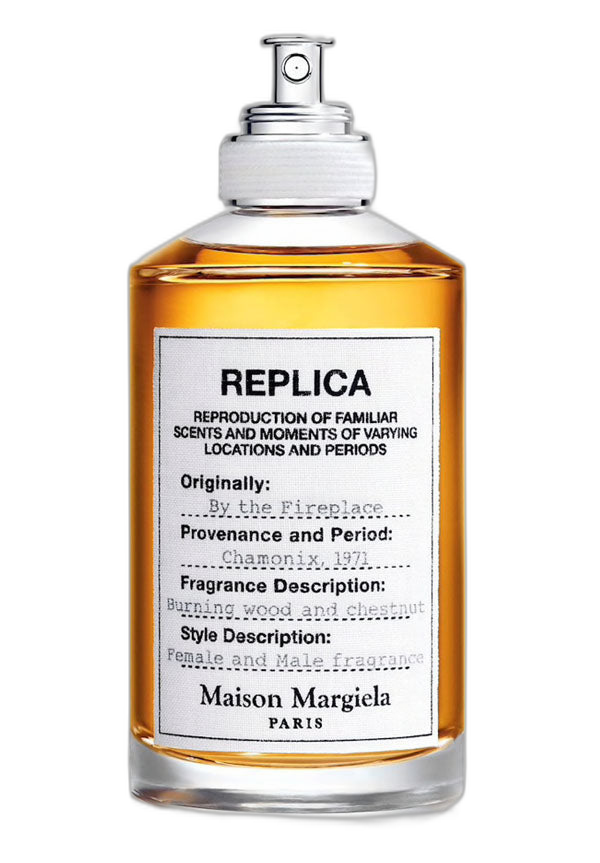
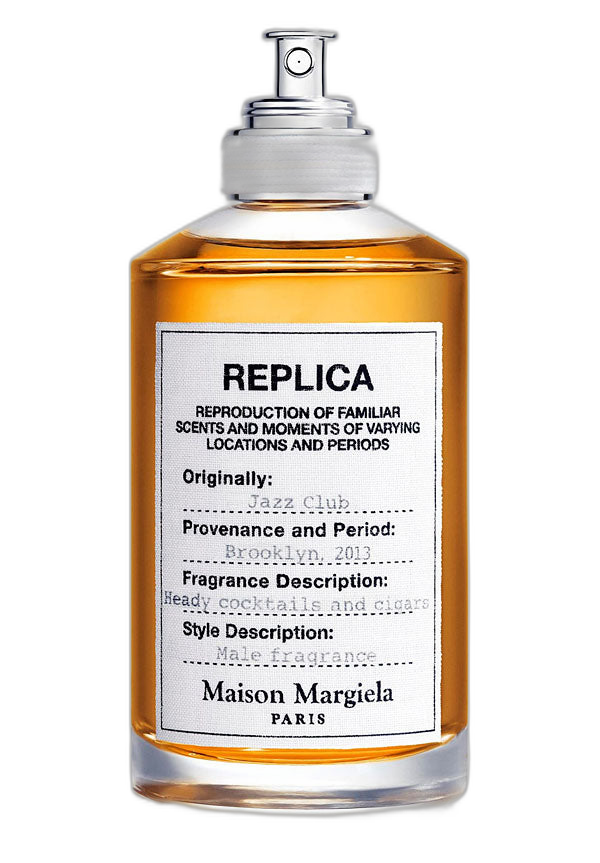
The visual identity of the 'Replica' collection is a direct extension of the fashion house's minimalist and utilitarian principles. The bottles are modeled after vintage apothecary jars, suggesting something medicinal, functional, and timeless. There's no ornate cap or gilded detailing. Instead, the pump is simply wrapped with a piece of natural cotton thread, a nod to the craft of couture. The most defining feature is the label. Just like the clothing, each bottle features a simple, 100% cotton tag, not an adhesive sticker. It's printed with black, typewriter-style text that specifies the scent's name, origin, and a short description, for example, 'Jazz Club: Reproduction of a Male Fragrance'. This clinical yet poetic presentation reinforces the idea that these are specimens of memory, collected and cataloged for personal exploration.
Philosophy
The philosophy of Maison Margiela's perfumery is captured in its title: 'Replica'. The house isn't trying to create a singular, aspirational scent that defines a person. Instead, it offers a wardrobe of olfactory moments. The creative brief for a perfumer isn't a list of notes, but a feeling, a place, and a time, like 'cozy winter evening by a crackling fire' or 'a smoky Brooklyn jazz club'. This approach democratizes fragrance, shifting the focus from the perfumer's abstract creation to the wearer's personal connection. They believe a scent's power lies in its ability to trigger memory and emotion. By recreating these universal experiences, they provide a starting point for a deeply individual story. It's a generous and clever way to think about perfume, making the wearer, not the brand, the true author of the scent's meaning.
Key Milestones
1988
Martin Margiela founds his fashion house, Maison Martin Margiela, in Paris.
1994
The 'Replica' concept is introduced in fashion, a collection of reproduced vintage garments with labels describing their origin.
2002
OTB Group, led by Renzo Rosso, acquires a majority stake in the company.
2009
Founder Martin Margiela anonymously departs from his brand.
2012
The 'Replica' fragrance collection launches, translating the fashion concept into scent with three initial fragrances.
2015
The house releases 'By the Fireplace' and 'Jazz Club', two scents that become global bestsellers and define the collection's success.
At a Glance
Brand profile snapshot
Origin
France
Founded
1988
Heritage
38
Years active
Collection
2
Fragrances released
Avg Rating
4.6
Community sentiment