




The Heritage
The Story of Cartier
From a small Parisian workshop in 1847 to one of the most celebrated fragrance houses in the world, Cartier has spent over 175 years translating the language of precious gems into something you can wear against your skin. Every Cartier fragrance is conceived as invisible jewellery, an intimate ornament that speaks to the same desire for beauty and craftsmanship that has drawn royalty and connoisseurs to the Maison for generations. The panther prowls through its scent wardrobe, diamonds catch light in crystalline bottles, and rare ingredients arrive from distant corners of the globe. This is luxury in its most wearable form.
Heritage
Louis-François Cartier was born in 1819 to a washerwoman and a metal worker in Paris. He took over his master's workshop in 1847 and renamed it Cartier. His son Alfred inherited the business, moving it to the prestigious rue de la Paix. Alfred's three sons then divided the world between them as children, tracing borders across a map in a Paris bedroom: Louis would run Paris, Pierre New York, Jacques London. By the early 1900s, the Maison held the royal warrant from Edward VII, who declared Cartier 'the jeweller of kings and the king of jewellers.' The king commissioned 27 tiaras for his coronation. American heiresses including Consuelo Vanderbilt and Marjorie Merriweather Post followed European royalty through Cartier's doors. Louis Cartier proved the visionary, introducing platinum to jewellery-making and creating the Santos and Tank watches. In the 1930s, Jeanne Toussaint, muse to Louis Cartier, brought the panther to life, earning her the nickname that became the Maison's defining symbol. The Duchess of Windsor commissioned a panther brooch in 1948 with a 116.75 carat emerald. Richard Burton gave Elizabeth Taylor a 69.42 carat diamond from Cartier; Prince Rainier chose the Maison for Grace Kelly's engagement ring. By the 1970s, Cartier broadened its reach with Must de Cartier, bringing accessible luxury to a new generation. The fragrance collection arrived shortly after, conceived as precious gems for the skin.
Craftsmanship
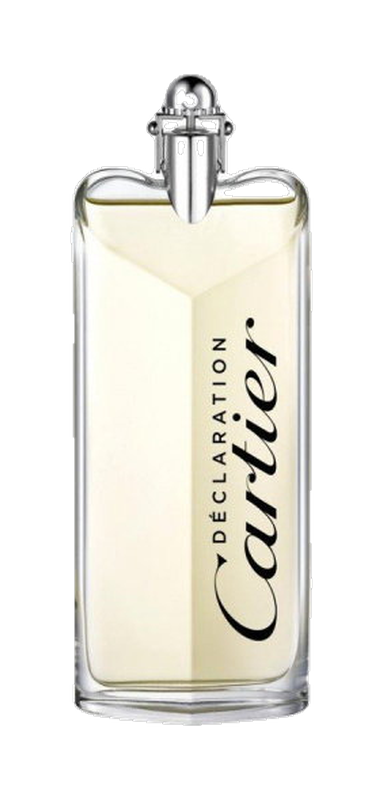
Cartier perfumes are built from the finest ingredients sourced across the globe, selected with the same exacting standards applied to the Maison's precious stones. The creation process involves master perfumers who translate Cartier's vision into olfactory form, working with rare naturals and precious absolutes. Each fragrance undergoes extensive refinement to achieve the quality the Maison demands. The bottles receive the same devotion as Cartier's jewellery pieces, designed as objects that catch the eye before the cap is even removed. Crystalline flasks echo Art Deco geometry, while signature red lacquer and gold detailing reference the Trinity ring and the Maison's jewellery codes. Some bottles feature the panther as a sculptural stopper, rendered in metal or crystal. The juice inside is formulated to evolve on the skin, revealing different facets over hours of wear. Cartier describes its scented creations as invisible and intimate precious gems, a phrase that captures the ambition: to create something rare, beautiful, and worn close to the body.
Design Language
The Cartier fragrance world draws directly from the Maison's jewellery universe. Cardinal red, gold, and black form the visual foundation, appearing in packaging, bottles, and advertising campaigns. The panther prowls through the collection in multiple forms: as a literal sculptural element capping certain bottles, as an abstracted pattern, or as the primal feline energy infused into animalic fragrance notes. The bottles themselves are designed to stand alone as decorative objects, referencing Art Deco silhouettes, geometric forms, and the clean lines of iconic watch designs like the Tank. Some flasks echo the facets of cut diamonds; others feature the soft cabochon curves of classical gemstones. Presentation maintains jeweller's standards, with carefully wrapped boxes and thoughtful details that reward attention. Every visual touchpoint reinforces the message: these are not merely perfumes but wearable treasures, extensions of the same world that produces tiaras for coronations and engagement rings for princesses.
Philosophy
Cartier believes beauty speaks a universal language that crosses borders and cultures. The Maison draws from its jewellery heritage to create fragrances that feel like intimate accessories, objects of desire to be worn close to the skin. Every scent must embody the same devotion to exceptional materials and timeless elegance that defines Cartier's work in gold and gemstone. The house approaches fragrance as an extension of its creative universe rather than a separate category. This means boldness tempered by refinement, modernity rooted in tradition, and an unmistakable sense of occasion. Cartier perfumes are not meant to disappear into the background. They announce presence, they capture attention, they linger in memory the way a extraordinary piece of jewellery does. The panther, born from Jeanne Toussaint's bold vision in the 1930s, remains the soul of the collection, prowling through designs both literal and abstracted.
Key Milestones
1847
Louis-François Cartier registers his hallmark and takes over a master's workshop in Paris, founding the Maison.
1859
The first Cartier boutique opens at rue de la Paix, establishing the Maison in Paris's prestigious jewellery district.
1904
Louis Cartier designs the Santos watch for aviator Alberto Santos-Dumont, one of the first wristwatches ever made.
1933
Jeanne Toussaint becomes creative director of fine jewellery, bringing the panther motif that would define Cartier's aesthetic for decades.
1948
The Duchess of Windsor commissions her famous panther brooch with a 116.75 carat emerald, cementing the feline as Cartier's signature.
1982
Cartier launches its first major fragrance collection, bringing the Maison's jewellery sensibility to the world of scent.
At a Glance
Brand profile snapshot
Origin
France
Founded
1847
Heritage
179
Years active
Collection
1
Fragrances released
Avg Rating
4.0
Community sentiment