




The Heritage
The Story of Comme des Garçons
Since 1994, Comme des Garçons Parfums has treated fragrance as wearable conceptual art. Founded by fashion visionary Rei Kawakubo and perfumer Christian Astuguevieille, the house rejects conventional beauty standards and commercial logic alike. Its unorthodox scents and sculptural bottles challenge what perfume can be, turning industrial aromas and abstract ideas into collectible works. More than a fragrance brand, it is an ongoing artistic experiment.
Heritage
The perfume line was born from a chance 1992 encounter between Rei Kawakubo and Christian Astuguevieille in Tokyo, when the fashion designer was already renowned for her radical Comme des Garçons label, founded in 1969. Their shared ambition to subvert fragrance conventions led to the formal launch of Comme des Garçons Parfums in 1993, with the first scent arriving in 1994. CEO Adrian Joffe, Kawakubo's long time collaborator, has framed the perfume arm as art before commerce. The 2002 licensing agreement with Puig secured distribution infrastructure while the brand retained creative and production control. By 2015, fragrance represented only around 5% of the label's total revenue, yet every scent remains in production regardless of commercial performance. This stubborn commitment to artistic continuity has made the house a touchstone for niche perfumery. Landmark releases include Odeur 53 in 1998, which introduced the anti-perfume concept, and Concrete in 2017, housed in an actual concrete bottle.
Craftsmanship
The perfumers working with Comme des Garçons approach each fragrance as a conceptual brief rather than a traditional brief. Odeur 53, released in 1998, comprised 53 atypical notes including oxygen, flaming rock, nail polish, and photocopier toner, creating a synthetic signature that felt more like a manifesto than a perfume. Series collections explore single ingredients through multiple interpretations, treating each fragrance as a focused study rather than a commercial product. Nicolas Beaulieu composed Concrete in 2017, capturing the visceral sensation of rain meeting cement through rose oxide, sandalwood, and spice. The formula partnered with a concrete-encased bottle, collapsing the boundary between scent and sculpture. Every aspect of production, from composition to packaging, serves the artistic concept rather than market expectations. The result is fragrance that rewards engagement, demanding attention rather than offering instant comfort.
Design Language
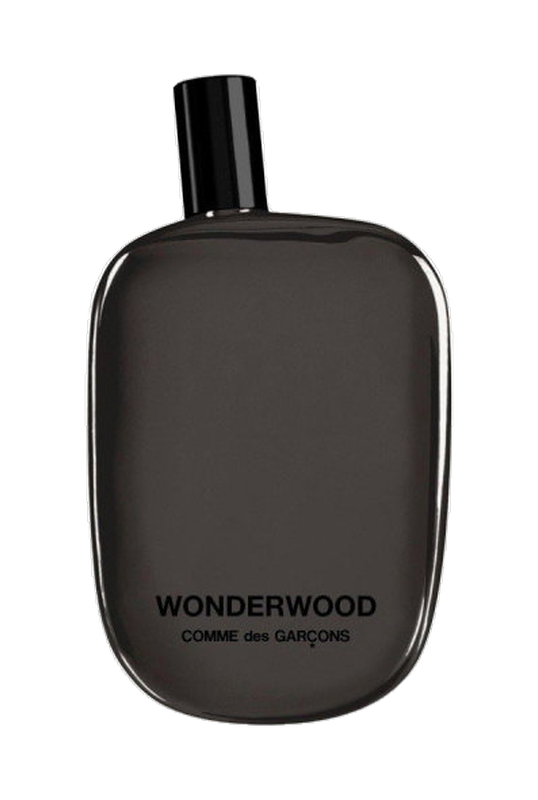
The visual identity of Comme des Garçons Parfums mirrors its olfactory philosophy. Campaign imagery runs from stark minimalism to candid street-style portraits, consistently subverting traditional fragrance advertising conventions. The iconic pebble bottle, first designed for Comme 2, exemplifies the house approach. Its smooth, asymmetrical silhouette fits the palm like a river stone, prioritizing tactile presence over shelf appeal. Iterations including Glitter, I Love You, and Happy Pillow have become collector's items. Concrete extended this material thinking by embedding the scent in an actual concrete vessel. Collaborations with artists like Kaws and musicians like Pharrell Williams have produced bottles that function as independent art objects. The brand operates through its own distribution and selected partners, including Dover Street Market, the concept boutique Kawakubo founded in 2004. Every retail and visual touchpoint reinforces the message that this is not perfume as usual.
Philosophy
From the start, Kawakubo applied her avant-garde design philosophy to fragrance, rejecting predictable notions of gender, beauty, and marketability. The debut 1994 scent already announced this intent with its spiced, textured composition. Odeur 53 in 1998 crystallized the anti-perfume movement, proving that synthetic, industrial, and everyday aromas could constitute high art. CEO Adrian Joffe has stated openly that perfumes continue because of artistic value, not profit. This philosophy positions fragrance as a medium for ideas, not consumer goods. The brand organizes its work into thematic series, each exploring a single concept through multiple interpretations. Leaves examines foliage. Incense probes spirituality. Synthetic celebrates the artificial. Sherbet investigates sweetness. Every release functions as a statement about the boundaries of perfume itself. The aim is never to follow trends but to stay creatively autonomous, producing work that is challenging, intellectually rigorous, and emotionally complex.
Key Milestones
1992
Rei Kawakubo meets Christian Astuguevieille in Tokyo, planting the seed for the fragrance line
1994
First Comme des Garçons Eau de Parfum launches, immediately breaking from industry norms with its spiced, unconventional composition
1998
Odeur 53 releases, pioneering the anti-perfume concept with 53 atypical notes including oxygen and photocopier toner
2002
Puig licensing deal secures distribution while the brand retains creative and production rights
2017
Concrete, composed by Nicolas Beaulieu, debuts in a bottle made partly of actual concrete, merging scent with sculpture
At a Glance
Brand profile snapshot
Origin
France
Founded
1993
Heritage
33
Years active
Collection
1
Fragrances released
Avg Rating
3.5
Community sentiment