




The Heritage
The Story of Cacharel
Cacharel is the French fashion and fragrance house that captured youthful romance in a bottle. Founded in 1958 by Jean Bousquet, this Parisian brand revolutionized ready-to-wear with its bright, liberated spirit before conquering the perfume world with Anais Anais in 1978. Still beloved for iconic scents like Loulou, Noa, and Amor Amor, Cacharel represents effortless French femininity at its most playful and accessible. Now part of the L'Oreal family, the brand continues to craft fragrances that speak to the young and young at heart.
Heritage
Jean Bousquet was practically born into fashion. His father sold sewing machines, so the rhythmic hum of stitches and the smell of fresh fabric were childhood constants. After training as a tailor at the Ecole Technique de Nimes, he worked as a designer for two years before making his move to Paris in 1958. He founded Cacharel in a tiny atelier in Le Marais, naming the house after a small duck native to the Camargue wetlands. The word evoked everything he wanted his brand to be: light, bright, and utterly free. The breakthrough came in 1963. French Elle put a Cacharel seersucker blouse on its cover, and suddenly the world wanted in. Those crisp, colorful shirts liberated women from the corseted constraints of haute couture. Bousquet pioneered the concept of pret-a-porter, bringing high fashion to the high street long before it was commonplace. By the late 1960s, Cacharel's Liberty print dresses were everywhere, from Paris's Left Bank to London's King's Road to Fifth Avenue. The fragrance chapter opened in 1978 with Anais Anais, a white floral that captured the brand's romantic soul. It became a phenomenon, reportedly pioneering the concept of designer fragrance at an accessible price point. Loulou followed in 1987, then Eden in 1994, Noa in 1998, and Amor Amor in 2003. Each scent embodied a different facet of Cacharel's playful femininity. Bousquet himself served as Mayor of Nimes from 1983 to 1995, a fascinating detour that saw him attempt to transform his hometown into a cultural capital. Today, Cacharel operates under L'Oreal's ownership, with creative direction passing through various talented hands including Clements Ribeiro and, since 2011, designers Ling Liu and Dawei Sun.
Craftsmanship
While Cacharel fragrances are produced within L'Oreal's extensive infrastructure rather than in an independent atelier, the house maintains certain commitments to quality and creative integrity. The fragrances are formulated in Paris by experienced perfumers, including renowned noses like Olivier Cresp, who have shaped some of the brand's most enduring creations. The production philosophy reflects Cacharel's democratic roots. These are not limited-batch artisanal scents with rare ingredients priced into the stratosphere. Instead, the craftsmanship lies in the art of accessible excellence. Creating a fragrance that millions can afford while still smelling distinctive and high-quality requires its own expertise. The brand sources quality raw materials through L'Oreal's established supply chains, ensuring consistency across global markets. What distinguishes Cacharel's approach is the emphasis on wearability and emotional resonance over technical complexity. The perfumers working on Cacharel briefs understand that their audience wants to smell good, receive compliments, and feel a little more romantic. The craftsmanship serves this goal directly, without the experimental detours or challenging artistic statements that niche houses might pursue. Each Cacharel fragrance is tested extensively for mass appeal, longevity, and versatility before release.
Design Language
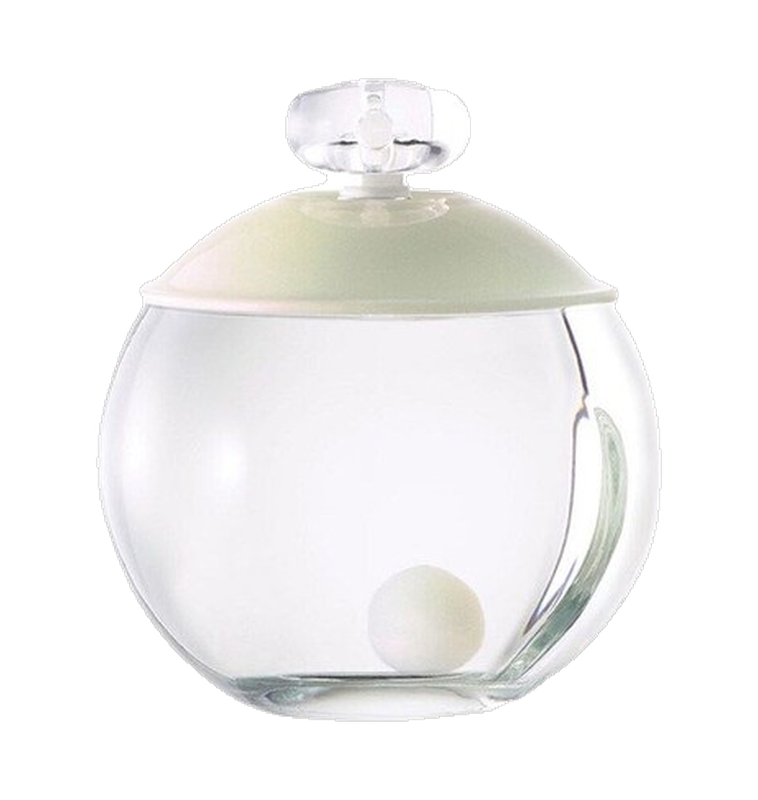
Cacharel's visual identity is soft, romantic, and unmistakably feminine. The brand's packaging favors gentle curves over sharp angles, pastel palettes over bold primaries. Think soft pinks, creamy whites, and watercolor florals. The bottles are designed to look lovely on a vanity, not intimidating on a shelf. The original Anais Anais packaging embodied this perfectly: delicate, white, almost bridal in its innocence. Loulou took a bolder turn with its deep blue and red, reflecting the more sensual character of the fragrance within. Noa returned to ethereal whites with its signature pearl floating inside the bottle, a visual metaphor for purity and luminescence. Amor Amor brought in warmer reds and ambers, signaling passion and energy. The fashion side has always influenced the fragrance aesthetic. Those famous Liberty prints, the seersucker textures, the effortless mixing of patterns. Cacharel's visual language speaks of Sunday mornings, garden parties, and first dates. It's approachable luxury, the kind that doesn't try too hard. Even under different creative directors, the brand has maintained this core identity: feminine without being childish, romantic without being saccharine, French without being aloof.
Philosophy
Cacharel has always believed that femininity should feel effortless, not performative. The brand's core philosophy centers on youthful romance without pretension. Where other French houses might chase haute couture grandeur, Cacharel celebrates the girl next door, the student on her scooter, the young professional finding her footing. There's a democratic spirit here. Beauty shouldn't require a trust fund. This philosophy extends to fragrance. Cacharel scents are designed to be worn, not worshipped. They're approachable, wearable, and emotionally direct. Anais Anais doesn't try to be mysterious. It wants to smell like white flowers and possibility. Amor Amor doesn't whisper. It declares itself with fruity exuberance. The brand trusts its audience to know what they like, and gives it to them without unnecessary complications or artistic pretension.
Key Milestones
1958
Jean Bousquet founded Cacharel in Paris, naming the house after a small duck from the Camargue region
1963
French Elle featured a Cacharel seersucker blouse on its cover, launching the brand to international fame
1978
Launch of Anais Anais, the brand's first fragrance, which became a worldwide phenomenon
1987
Loulou was released, establishing Cacharel's presence in the oriental fragrance category
1998
Noa debuted with its signature pearl-in-bottle design and soft floral character
2003
Amor Amor introduced a fruity, passionate energy to the Cacharel fragrance line
At a Glance
Brand profile snapshot
Origin
France
Founded
1958
Heritage
68
Years active
Collection
1
Fragrances released
Avg Rating
3.8
Community sentiment