




The Heritage
The Story of Boucheron
Boucheron is the oldest jewelry house on Place Vendôme, where Frédéric Boucheron chose the sunniest corner in 1893 to showcase his revolutionary designs. A family dynasty founded in 1858, the maison has dressed royalty from Tsar Nicholas II to the Maharajah of Patiala, translating its sculptural approach to precious materials into fragrances that capture the same light, movement, and Parisian elegance. Now part of Kering, Boucheron's perfumes (from the iconic Jaïpur to the contemporary Quatre collection) reflect 165 years of craftsmanship and the singular vision that made them pioneers.
Heritage
Frédéric Boucheron broke with his family's cloth merchant tradition at age 14, apprenticing with Parisian jewelers before opening his own boutique in 1858 at the Galerie de Valois in Palais Royal. Coming from drapers, he approached gold and gems with an unusual perspective. He sought to make jewelry as fluid and wearable as fabric, hugging the body rather than constraining it. His instinct proved extraordinary. By 1866, he had established his atelier and won the Gold Medal at the Exposition Universelle in 1867. The following year, his Feuillage necklace commissioned by American heiress Marie-Louise MacKay brought further acclaim. In 1879, he created the Question Mark necklace, a claspless design that freed women from the constraints of traditional high jewelry at a time when both clothing and accessories still restricted their bodies. In 1893, Frédéric made his boldest move. While all great Parisian jewelers clustered on Rue de la Paix, he became the first to open on Place Vendôme, selecting number 26 (the former residence of the Countess of Castiglione) for its exceptional light. This choice established Place Vendôme as the epicenter of fine jewelry. The order books soon read like a who's who of global royalty. Tsar Nicholas II commissioned a pearl and diamond tiara for his fiancée Alexandra (Queen Victoria's granddaughter), a piece that took over 2,000 hours to complete and became the Tsarina's signature jewel. In 1928, the Maharajah of Patiala arrived in Paris with his treasure, entrusting Boucheron with the largest order ever placed at Place Vendôme. Two years later, the Shah of Iran commissioned the maison to rework the treasures of the Persian Empire.
Craftsmanship
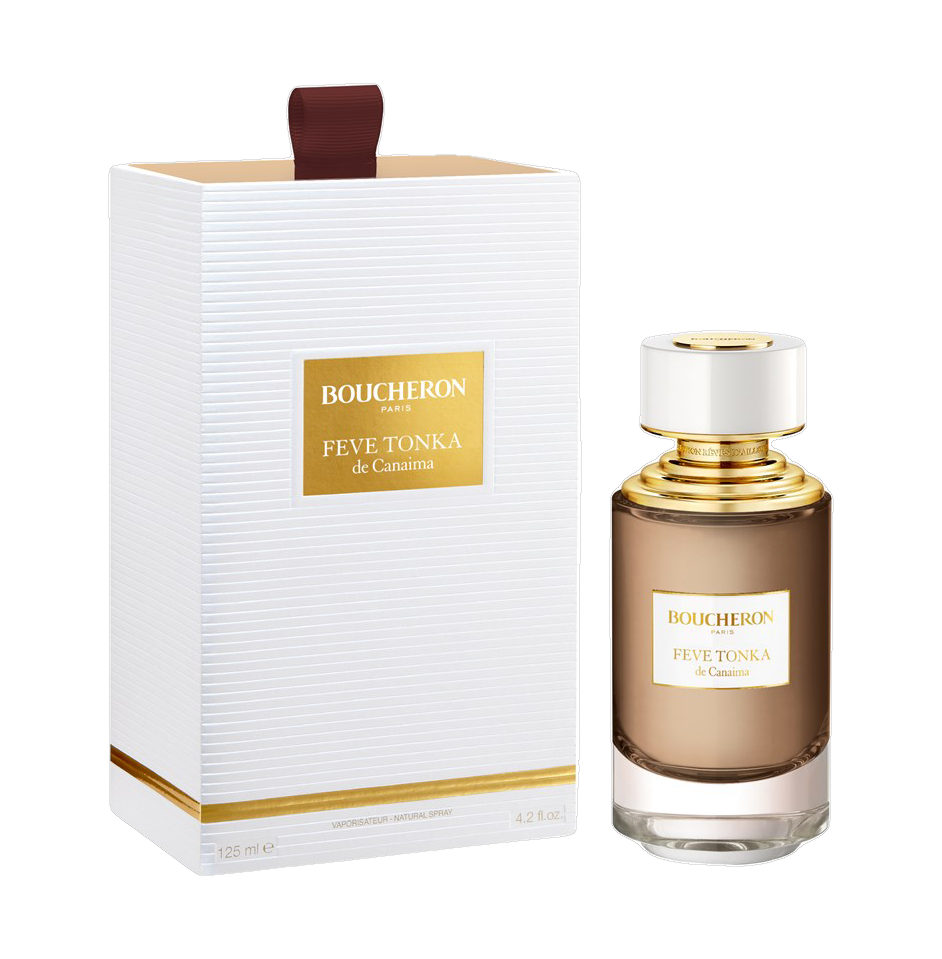
Boucheron's reputation was built on technical audacity. The Question Mark necklace required inventing new settings that eliminated the need for a clasp while maintaining security. The rondelle cut of diamonds was pioneered by Bordinckx working with the house. Paul Legrand, chief designer from 1863-1867 and again 1871-1892, developed the technique of combining pearls with diamond rondelles that became a house signature. In fragrance, this translates to a jeweler's precision in composition. The original Boucheron perfume (1988) established the house's approach: sophisticated, Parisian, referencing the Place Vendôme address without being literal. The Jaïpur line (1994) brought the warmth and color of India into the collection, reflecting the maison's long history with Indian royalty. The Quatre collection (2015) translates the famous four-band ring into scent, with three perfumers (Antoine Maisondieu, Nadège Le Garlantezec, and Natalie Gracia-Cetto) collaborating to create something that captures the same interwoven elegance. La Collection Boucheron, launched in 2017 with fragrances like Ambre d'Alexandrie and Oud de Carthage, applies the high jewelry approach to single ingredients, treating oud, amber, iris, and tuberose as a gemologist treats exceptional stones.
Design Language
The Boucheron visual identity begins with light. Frédéric chose 26 Place Vendôme specifically for how sunlight flooded through its windows, and that radiance remains central to the brand's imagery. The boutiques combine architectural grandeur with intimate discovery, showcasing pieces in ways that invite touch and imagination. The bottle designs reflect this heritage. The original Boucheron fragrance came in a flacon inspired by the Question Mark necklace, that signature claspless curve rendered in glass. The Quatre bottles reference the ring collection with cylindrical forms and metallic bands echoing white and yellow gold. Place Vendôme features architectural lines that mirror the famous square. Even the La Collection fragrances, with their gemstone-colored liquids and clean lines, suggest precious vials waiting to be discovered. Wladimir, the maison's famous cat who appeared in 1980s advertising, still occasionally surfaces in brand imagery, a nod to Boucheron's playful side beneath the haute joaillerie seriousness.
Philosophy
Innovation through wearability. That has been Boucheron's guiding principle since Frédéric first displayed his pieces vertically in his boutique windows, allowing passersby to envision them being worn rather than merely observed. The maison treats precious materials with the suppleness of fabric, creating pieces that move with the body and catch light from every angle. This philosophy extends to fragrance. Just as the Question Mark necklace revolutionized how women wore jewelry, Boucheron's perfumes aim to feel like second skin rather than statement pieces. Under Creative Director Claire Choisne (since 2011), the house produces two high jewelry collections annually, Histoire de Style and Carte Blanche, balancing technical mastery with what they call 'the freedom to create.' The same balance appears in their fragrance collections, from the architectural Quatre line inspired by their iconic ring to La Collection Boucheron, which explores single precious ingredients with the same focus a jeweler brings to a exceptional stone.
Key Milestones
1858
Frédéric Boucheron opens his first boutique at Galerie de Valois, Palais Royal, bringing a draper's sensibility to jewelry design
1879
Creates the revolutionary Question Mark necklace, a claspless design that freed women from traditional jewelry constraints
1893
First jeweler to open on Place Vendôme at 26, establishing the square as the epicenter of fine jewelry
1928
The Maharajah of Patiala entrusts his treasure to Boucheron, the largest order ever placed at Place Vendôme
1988
Launches first fragrance, Boucheron, entering the perfume world after 130 years of jewelry excellence
2015
Quatre launches, translating the iconic four-band ring into fragrance with three collaborating perfumers
At a Glance
Brand profile snapshot
Origin
France
Founded
1858
Heritage
168
Years active
Collection
1
Fragrances released
Avg Rating
3.9
Community sentiment