Heritage
A house, in its own words
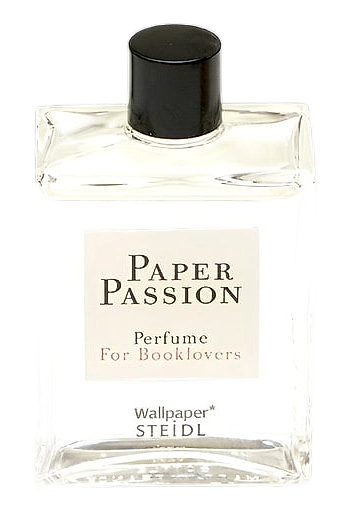
Wallpaper* magazine, founded by Tyler Brule in 1996, built its reputation as a design authority by treating every surface, material, and object as worthy of editorial scrutiny. The magazine's annual Handmade exhibition, presented at Design Miami/, was its most direct expression of that philosophy: a celebration of craft, materiality, and the handmade object. Gerhard Steidl, the German publisher behind Steidl Verlag, operated on a parallel wavelength. Based in Gottingen, Steidl had built a legendary reputation among photographers and art book collectors by treating the printing and binding of a book as inseparable from the photography itself. He was, by multiple accounts, obsessed with the physical qualities of the printed page, including its smell. The Handmade 2011 exhibition provided the occasion for these two worlds to collide. Wallpaper* commissioned Steidl to help translate his passion for the scent of a freshly printed book into a wearable form. The project brought in Karl Lagerfeld, whose involvement in the design dimension of the project gave it a high-profile creative edge, and Geza Schoen, the Berlin-based perfumer tasked with the chemistry. The result, unveiled at the 2011 exhibition and produced for retail in 2012, generated significant media attention for its unusual premise and its execution. It was, by any measure, one of the more conceptually specific fragrances released that decade. The guiding idea behind Paper Passion is that a book is not merely a container for text. It is a physical object with its own sensory identity, and its smell is as characteristic as its cover design. The team behind the fragrance believed that scent and print share a structural similarity: both operate through layers, with meaning or aroma revealing itself gradually rather than all at once. This conviction drove every decision in the fragrance's development. Rather than producing a conventional perfume with top, heart, and base notes, Geza Schoen constructed the entire composition around a single accord designed to evoke the moment of opening a new book. The accord was not metaphorical. It was chemical, built from the molecular compounds present in fresh paper and printing ink. The philosophy also carried a democratic sensibility. The scent was designed to be immediately legible to anyone who had ever smelled a new book, without requiring prior fragrance literacy. Its audience was the devoted reader as much as the perfume collector, which broadened its appeal considerably. The bottle and packaging reinforced this ethos, presenting the fragrance as a design object rather than a luxury accessory.