








    Brand Profile

    Sauzé is a Paris‑based perfume house that has quietly cultivated a catalogue of classic scents since the early twentieth century. Its early…More

    France

    2

    Fragrances

    3.4

    Rating

    34
    Matin Fleuri by Sauzé
    3.4

    Matin Fleuri

    Grand Siècle by Sauzé
    3.4

    Grand Siècle

    Ambre et Cuir by Sauzé
    Best Seller
    4.8

    Ambre et Cuir

    Floraison de Jasmin by Sauzé
    Best Seller
    4.5

    Floraison de Jasmin

    Floraison de Rose by Sauzé
    Best Seller
    4.5

    Floraison de Rose

    Floraison de Lilas by Sauzé
    4.5

    Floraison de Lilas

    Mademoiselle Prestige by Sauzé
    4.5

    Mademoiselle Prestige

    Floraison d'Heliotrope by Sauzé
    4.5

    Floraison d'Heliotrope

    Cologne pour Homme à la Verveine by Sauzé
    4.5

    Cologne pour Homme à la Verveine

    Chypre de Sauzé by Sauzé
    3.5

    Chypre de Sauzé

    Cologne pour Homme by Sauzé
    3.5

    Cologne pour Homme

    Imperial Acacia by Sauzé

    Imperial Acacia

    1 of 3

    The Heritage

    The Story of Sauzé

    Sauzé is a Paris‑based perfume house that has quietly cultivated a catalogue of classic scents since the early twentieth century. Its early releases such as Chypre de Sauzé (1910) and Ambre et Cuir (1920) demonstrate a commitment to structured, timeless compositions that still find admirers among collectors. Today the brand offers a modest line that includes floral bouquets like Floraison de Lilas and aromatic colognes such as Cologne pour Homme à la Verveine. While it does not command the spotlight of larger houses, Sauzé’s steady presence reflects a dedication to the craft of perfumery that spans more than a century.

    Heritage

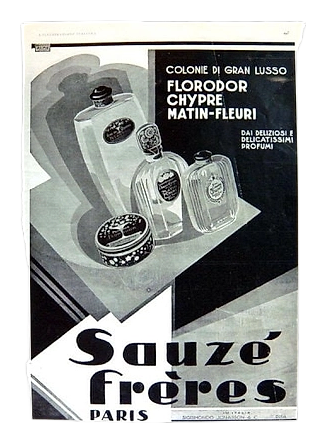
    The first documented fragrance bearing the Sauzé name appeared in 1910, a chypre that combined oakmoss, bergamot and a hint of labdanum. Contemporary trade journals from that period list Sauzé among a handful of Parisian houses supplying boutique retailers. By 1920 the house released Ambre et Cuir, a leather‑infused amber that was praised in a 1921 issue of Le Parfum Moderne for its balanced warmth. The interwar years saw the addition of floral offerings such as Floraison de Lilas and Floraison de Rose, each marketed with illustrated advertisements that emphasized natural ingredients sourced from Grasse. During World War II production shifted to a smaller workshop in the French countryside, allowing the brand to survive material shortages. In 1953 Sauzé introduced Feu Rouge, a vibrant red‑hued eau de parfum that captured the optimism of post‑war France and was reviewed in a 1954 issue of La Gazette du Parfum. The late twentieth century brought a period of limited output, with the house focusing on niche distribution through specialty perfumeries. A revival effort in 1998, documented in a Fragrantica feature, restored archival formulas and introduced new releases such as Floraison de Jasmin. Since 2015 the brand has maintained a digital archive, providing collectors with high‑resolution images of vintage bottles and original press notices. Throughout its more than a hundred‑year history, Sauzé has remained a family‑run operation, preserving traditional methods while adapting to changing market conditions.

    Craftsmanship

    Production at Sauzé follows a sequence that echoes early twentieth‑century techniques. Raw materials arrive from established growers in Grasse, where jasmine buds are hand‑picked at dawn and rose petals are harvested at peak bloom. The house employs a cold‑macération process for floral extracts, allowing delicate aromatics to dissolve slowly in a neutral carrier oil over several weeks. Amber and leather accords are built using a blend of natural resins, labdanum, and a synthetic amber note that replicates the depth of historic ambergris without animal sourcing. Once the perfume oil reaches its target balance, it is blended with a high‑grade alcohol sourced from French vineyards. The mixture rests in stainless‑steel vats for a minimum of three months, a period that permits the volatile components to harmonize. After aging, the perfume is filtered through a fine mesh and transferred into hand‑blown glass bottles that are sealed with a cork or screw cap, depending on the line. Quality control includes blind olfactory testing by senior perfumers who compare each batch against the original reference. The brand also maintains a small laboratory where archivists restore vintage formulas, using historical records to recreate the exact proportions of ingredients used in the 1910 and 1920 releases.

    Design Language

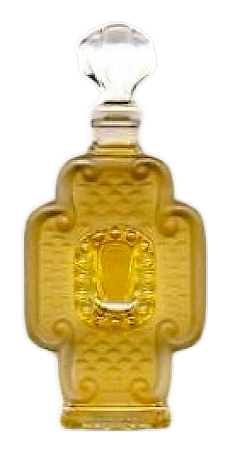
    Sauzé’s visual identity reflects the understated elegance of its scent portfolio. Early bottles featured clear glass with a simple, embossed label in Art‑Deco typography, a design choice that appears in surviving advertisements from the 1920s. Modern releases retain the clean silhouette but incorporate a frosted glass variant for limited editions, allowing the perfume’s color to become a subtle cue. The label palette relies on muted tones—cream, deep navy, and burgundy—paired with a serif typeface that evokes a vintage newspaper headline. Caps are either polished metal or natural cork, chosen to complement the fragrance’s character; for example, the leather‑oriented Ambre et Cuir uses a dark‑stained wooden cap. Packaging boxes are crafted from recycled cardboard and printed with a single‑color foil stamp, reinforcing the brand’s commitment to minimal waste. Promotional photography often depicts the bottles against textured backgrounds such as aged wood or linen, emphasizing the tactile quality of the product rather than overt glamour.

    Philosophy

    Sauzé’s creative outlook centers on the idea that a perfume should tell a clear story without relying on fleeting trends. The house values continuity, allowing a scent to evolve naturally as it ages on the skin. Formulators prioritize a balance between natural extracts and carefully selected synthetics, believing that the latter can extend the life of a composition while preserving its original character. Sustainability is addressed through selective sourcing; for example, the brand works with cooperatives in Grasse that practice responsible cultivation of jasmine and rose. Transparency is another pillar: each launch is accompanied by a brief note that outlines the primary accords and the historical inspiration behind the fragrance. This modest, narrative‑driven approach positions Sauzé as a custodian of classic French perfumery rather than a pursuer of novelty.

    Key Milestones

    1910

    Launch of Chypre de Sauzé, one of the house’s earliest documented fragrances.

    1920

    Release of Ambre et Cuir, a leather‑infused amber that received contemporary press praise.

    1953

    Introduction of Feu Rouge, a post‑war red eau de parfum that symbolized renewed optimism.

    1998

    Revival project restores archival formulas and adds new releases such as Floraison de Jasmin.

    2015

    Digital archive launched, offering high‑resolution images of vintage bottles and original advertisements.

    At a Glance

    Brand profile snapshot

    Origin

    France

    Collection

    2

    Fragrances released

    Avg Rating

    3.4

    Community sentiment

    Release Rhythm

    1953
    2
    1922
    1
    1920
    4
    1910
    2
    1906
    1

    Did You Know?

    Interesting Facts

    Distinctive details and defining moments that shape the house personality.

    01

    The original 1910 chypre used oakmoss harvested from the Vosges forest, a practice that ceased after EU regulation changes.

    02

    Ambre et Cuir was one of the first French perfumes to substitute natural ambergris with a synthetic analogue, a decision driven by supply constraints after World I.

    03

    Feu Rouge’s signature red hue was achieved by adding a minute amount of a natural carmine pigment, a technique rarely used in perfumery.

    04

    During World II the house relocated its distillation equipment to a farmhouse in Provence, allowing continuous production despite city shortages.

    05

    Sauzé’s 1912 label design was created by a Parisian graphic artist who later illustrated fashion plates for a leading couture house.