




Heritage
A house, in its own words
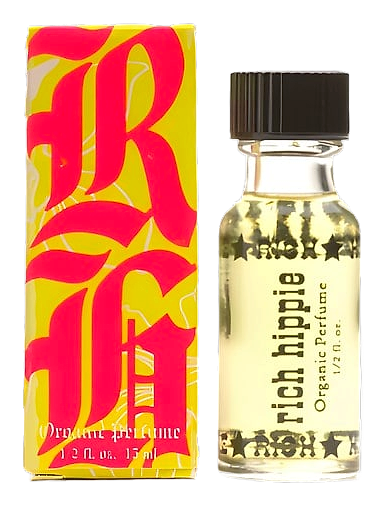
Rich Hippie was founded by Nannette Pallrand as a project devoted to reviving the perfumery practices that preceded World War II and the rise of the modern chemical industry. The brand emerged from Pallrand's interest in the artisanal methods used by French perfumers at the turn of the nineteenth into the twentieth century, a period when compositions were built from natural plant and flower extracts rather than laboratory-made aroma chemicals. From its California base, the house positioned itself as a small-batch alternative to the synthetic-heavy mainstream, and in 2005 it launched its initial slate of fragrances, including Bohemian Wedding, Rich Hippie, Rock Star, Bliss, Maharishi, Purple Haze, and Devotion. Subsequent releases such as Abbey Road extended the catalogue with florals composed of ingredients sourced from multiple regions, including French mimosa and Indian jasmine. The label has remained a family-scale operation, and its history is short by luxury standards but rooted in a conscious effort to connect modern wearers with a vanishing tradition of natural composition. The guiding idea at Rich Hippie is that perfume, before it became an industrial product, was closer to an agricultural one, built from blossoms, woods, and resins rather than from replicated molecules. Pallrand's stated vision is to restore that older relationship between the wearer and the raw materials of scent, treating each fragrance as a composition of living extracts rather than a formula of substitutes. The house frames its work in explicitly organic terms, and its materials are sourced with attention to provenance and cultivation method. There is also an undercurrent of cultural homage in the naming, with references to 1960s counterculture (Purple Haze, Maharishi, Rock Star) and to bohemian romance (Bohemian Wedding), suggesting a philosophy that pairs natural ingredients with a free-spirited, almost literary identity. The result is a house that sees perfumery less as fashion and more as craft, horticulture, and quiet cultural memory.