
    Home/Brands/Parfums J'ai Osé
    Brand Profile

    Parfums J'ai Osé

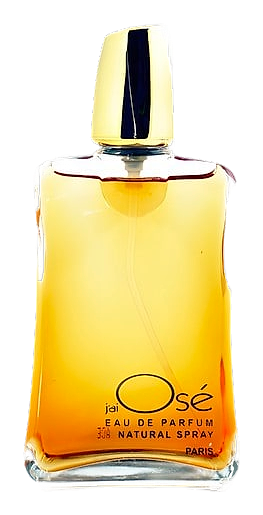
    Parfums J'ai Osé represents a storied chapter in French perfumery, best known for the original J'ai Osé fragrance that arrived in 1977 under the Guy Laroche label. The scent emerged during an era when perfumers were pushing boundaries, blending lush florals with warm, resinous base notes in what became classified as a floriental composition. The perfumer Max Gavarry crafted a fragrance centered on ripe peach and aldehydic brightness, grounded by jasmine, rose, and orris at its heart, with a foundation of patchouli, cedar, and benzoin providing lasting warmth. Over the decades, the J'ai Osé name has inspired variations including a 2001 reinterpretation and an aquatic flank. Today, Parfums J'ai Osé continues the lineage of this distinctive olfactory signature, offering contemporary wearers access to a fragrance that helped define a generation of French perfume making.

    France
    1
    Fragrances
    3.9
    Avg rating
    Shop the collection
    SignatureJ'ai Osé
    J'ai Osé
    EDP
    Community
    3.9
    Average rating
    across 1 fragrances
    Collection
    1
    Fragrances and counting

    Most loved

    Bestsellers from Parfums J'ai Osé

    J'ai Osé by Parfums J'ai Osé
    Parfums J'ai Osé
    J'ai Osé
    3.9
    Compare prices
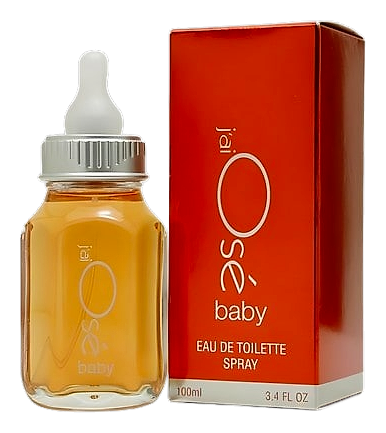
    Coming soonJ'ai Osé Baby by Parfums J'ai Osé
    Parfums J'ai Osé
    J'ai Osé Baby
    3.5
    Coming soon
    Coming soonJ'ai Osé Aqua by Parfums J'ai Osé
    Parfums J'ai Osé
    J'ai Osé Aqua
    3.2
    Coming soon

    Fresh in

    New from the house

    J'ai Osé by Parfums J'ai Osé
    Parfums J'ai Osé
    J'ai Osé
    3.9
    Compare prices
    Coming soonJ'ai Osé Baby by Parfums J'ai Osé
    Parfums J'ai Osé
    J'ai Osé Baby
    3.5
    Coming soon
    Coming soonJ'ai Osé Aqua by Parfums J'ai Osé
    Parfums J'ai Osé
    J'ai Osé Aqua
    3.2
    Coming soon

    Heritage

    A house, in its own words

    The J'ai Osé fragrance story begins in late 1970s France, when the Guy Laroche perfume house released what would become one of its most recognizable scents. The parfumer Max Gavarry created the original composition, working within a period when French perfumery was experiencing significant creative expansion. Guy Laroche himself had established his fashion house in 1957, eventually branching into fragrances that carried his designer's sensibility into the world of beauty. The name J'ai Osé, meaning I dared in French, signaled a fragrance unafraid of boldness, embodying the spirit of experimentation that characterized late 1970s olfactory creation. Sources vary on whether the initial release occurred in 1977 or 1978, a common discrepancy in vintage fragrance dating. The original formulation eventually faced discontinuation, a fate that befell many classic fragrances as houses pursued newer directions. However, the fragrance found renewed life through reformulation, with the house reincarnating the scent for modern audiences while attempting to preserve its essential character. This revival placed J'ai Osé in the company of other heritage fragrances that have returned from absence, speaking to the enduring appeal of certain classic olfactory visions.

    The creative philosophy behind J'ai Osé reflects the ambitions of late 1970s perfumery, when houses sought to create scents that projected confidence and sensuality in equal measure. The floriental classification placed J'ai Osé within a category that combined the lushness of floral bouquets with the warmth of oriental base notes, creating fragrances that felt both romantic and long-lasting. The inclusion of peach as a prominent top note demonstrated a preference for fruity brightness that could cut through the aldehydic opening, while the extensive use of jasmine and rose at the heart established the floral backbone that defined the composition. Patchouli and cedar at the base provided the woody, slightly earthy foundation that gave J'ai Osé its lasting power on the skin. The philosophy also embraced the aldehydic tradition, using these compounds to lift and illuminate the heavier notes while adding a vintage quality that distinguished the fragrance from simpler compositions. This approach to balance, mixing bright opening notes with deep base elements, exemplified the era's preference for complex, multidimensional scents that revealed different facets over time.

    1957
    Guy Laroche establishes his fashion house in Paris, laying the foundation for what would become a significant presence in French fashion and beauty.
    1977
    J'ai Osé launches, introducing a floriental fragrance created by perfumer Max Gavarry that combines aldehydic brightness with fruity, floral, and oriental elements.
    1978
    Some sources cite 1978 as the official launch year, reflecting common discrepancies in vintage fragrance dating practices.
    2001
    J'ai Osé Baby launches as a flanker, offering a reinterpretation of the original fragrance concept.
    Discontinued
    The original J'ai Osé formulation is discontinued, joining many classic fragrances of the era in falling out of production.
    Reformulated
    The house revives J'ai Osé with a new formulation, reintroducing the fragrance for contemporary audiences while attempting to preserve its essential character.

    Did you know?

    Interesting facts

    01

    The name J'ai Osé translates from French as I dared, a bold statement that positioned the fragrance as a declaration of confidence and boundary-pushing creativity.

    02

    The perfumer Max Gavarry created the original composition, working within the Guy Laroche house during a period when French perfumery was reaching new levels of creative ambition.

    03

    J'ai Osé was classified as a floriental, a category that blends the lushness of floral bouquets with the warmth and depth of oriental base notes, a combination that defined many iconic fragrances of the 1970s.

    04

    The fragrance featured peach as a prominent top note, a relatively bold choice that contributed to the scent's distinctive fruity character and helped distinguish it from more traditional aldehydic florals.