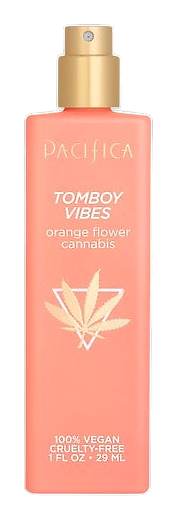

The Story
Why it exists.
The beginning
Tomboy Vibes arrived in 2020, a counter-argument to the idea that florals have to perform. Pacifica has built a thirty-year case for plant-based fragrance as something worth taking seriously, and this release pushed that argument further. The name says everything: no apology, no softening, no demographic targeting. Just a scent that smells like someone who woke up, went outside, and didn't overthink it.
What makes Tomboy Vibes work is the tension between its brightest and most grounded materials. Orange blossom gives it the immediate beauty, that unmistakable white floral that reads as clean, warm, alive. But cannabis is the counterweight, adding an herbal depth that keeps the sweetness from becoming precious. Green notes bridge the two, giving the composition the smell of open air and actual movement rather than a static idea of nature. It's not trying to smell expensive. It's trying to smell true.
The evolution
The opening hits fast. Orange blossom blooms bright for the first three to five minutes, almost aggressively fresh, the kind of hit that makes you check your wrist. Then the cannabis note arrives like a hand on your shoulder, bringing herbal green with it. The two hold together through the heart phase, a continuous conversation between floral and earth. By hour two, the sweetness recedes and the composition settles into something muskier, closer to skin, lasting another three to four hours depending on your chemistry. No dramatic phases. No vanishing act. Just orange blossom learning to whisper.
Cultural impact
Tomboy Vibes landed in a cultural moment where fragrance gender labels were being actively dismantled. Pacifica didn't make a campaign of it, the name did the work. The composition reinforced it. Unisex marketing was already common, but Tomboy Vibes went further: it smelled like the thing gender norms always associated with masculinity, outdoor activity, movement, absence of fuss, without sacrificing the white floral beauty that made people love florals in the first place. It became a quiet cult favorite among those who'd grown tired of being sold "fresh" as a concept.