






Heritage
A house, in its own words
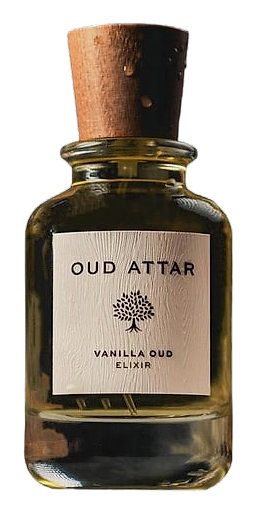
Oud Attar's heritage sits at the intersection of two of the world's oldest perfume traditions. Attar, the practice of distilling botanical materials into concentrated oils rather than alcohol-based sprays, traces back thousands of years across the Middle East, South Asia, and the broader Islamic world, with documented use in religious ritual, court life, and personal grooming. Oud itself, the resinous heartwood of agarwood trees, has a recorded history stretching back to ancient Indian and Chinese texts, where it appeared in spiritual ceremonies, and to Egyptian pharaonic culture, where the resin was prized among temple offerings and burial preparations. Early Vietnamese records from the third century A.D. already reference agarwood extraction. By the time attar-making flourished along trade routes connecting India, Persia, and the Arabian Peninsula, oud had become one of the most valued ingredients in the perfumer's palette, often referred to as liquid gold. Oud Attar enters this lineage as a contemporary specialist, channeling centuries of accumulated technique into a modern catalog of oud-forward oils. Rather than reinventing the form, the brand works within a tradition whose origins predate most of today's Western perfume houses by millennia. The creative vision behind Oud Attar centers on authenticity to the source material. Where many contemporary fragrances use synthetic oud molecules or trace amounts of natural agarwood oil, Oud Attar builds each composition around what the brand describes as its signature oud scent, treating the resin as the structural backbone rather than an accent note. This approach reflects a philosophy common to traditional Middle Eastern perfumery: that fragrance should be worn close to the skin, evolving slowly over hours, and that concentration matters more than sillage. The brand's elixir naming convention (used across Rose, Spiced, Sweet, Dark, Vanilla, Royal, Cigar, and Mastry variations) signals a commitment to intensity and personal layering rather than mass-market diffusion. There is also an implicit rejection of the Western spray-perfume paradigm in favor of the oil-based attar format, which carries no alcohol, lasts longer on skin, and connects the wearer to a perfumery tradition that predates modern bottling by centuries.