







Heritage
A house, in its own words
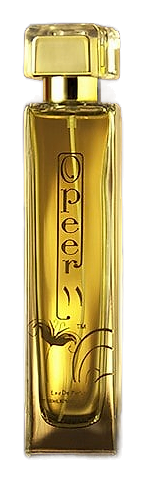
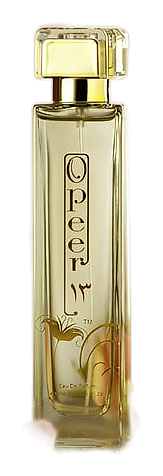
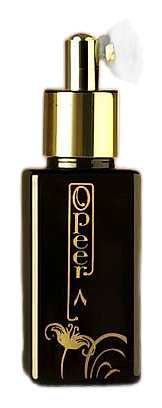
Opeer’s history is not well documented in the sources available. The catalogue itself provides the clearest evidence of the brand’s identity: its fragrances are identified primarily by numbers rather than descriptive names, including Opeer 13, Opeer 11, Opeer 56, Opeer 16, Opeer 6, Opeer 17, Opeer 8, Opeer 5, Opeer 7, and Opeer 15. Four listed compositions carry 2016 dates, placing them within the visible record of the brand’s numbered catalogue. The name Opeer combines the letter O with “peer,” a word that suggests companionship and equality, although the sources do not confirm whether this was the intended meaning or a deliberate brand narrative. The broader research supplied for this profile concerns the history of perfumery in general, including ancient production in Cyprus, Persia, Greece, Carthage, Arabia, and Egypt, but it does not connect Opeer to those traditions. Likewise, the references to the House of Houbigant and Alpha Aromatics describe separate perfume businesses and should not be read as part of Opeer’s lineage. Without a founding date, named founder, or first release recorded in reliable sources, Opeer’s heritage rests on the observable design of its catalogue. Its numbered system creates continuity across numerous scents and allows the range to grow without relying on a conventional house story. Opeer’s most clearly expressed creative idea is embedded in its naming system. Rather than framing each fragrance through a poetic title, the house indexes it with a number, turning scent selection into a form of exploration. This gives the catalogue an open-ended character, since numbers can point to distinct compositions without prescribing one narrative or mood for the wearer. The visible range spans labels as familiar as Opeer 5 and Opeer 6 and as unexpected as Opeer 56 and Opeer 17. That numerical breadth suggests a focus on variety, though it should not be treated as proof of a formal creative policy. The available sources do not describe a founder-led vision, olfactive family, or collaboration with a named perfumer, so any stronger interpretation would go beyond the record. Fragrance itself has a long history of cultural and ritual use, with historical sources identifying perfume production in Cyprus by around 2000 BCE and documenting aromatic practices across Persia, Greece, Carthage, Arabia, and ancient Egypt. Opeer appears to operate within that broader culture of scent, but its contribution is more contemporary in presentation. Its identity comes from clarity, sequence, and the invitation to compare compositions on their own terms.