


Heritage
A house, in its own words
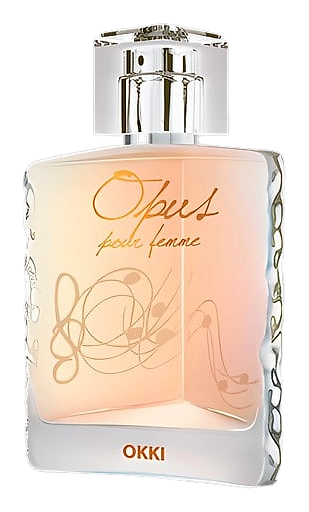
The precise origins of OKKI remain somewhat obscured in available documentation, making it difficult to establish a comprehensive founding narrative. What can be confirmed from fragrance databases is that the house released its first notable creations in 2011 with the Opus pour Homme and Opus pour Femme pair, immediately establishing a thematic duality in its approach to scent creation. The following year brought La Muse in 2012, a fragrance that expanded the house's aesthetic vocabulary. The collection reached its documented apex in 2013 with La Muse Sensuelle, suggesting an evolution toward more nuanced, intimate olfactory expressions. The brand's choice of the name 'Eau de Euphrates' for its founding concept reportedly draws from one of humanity's oldest waterways, a source of civilization referenced across Mesopotamian, Persian, Greek, and Roman civilizations. Ancient records indicate perfume production existed near Cyprus around 2000 BCE, with refinement occurring across Persia, Greece, Carthage, and Arabia in subsequent centuries. However, OKKI itself appears to be a more recent creation, operating outside the centuries-long lineage of established houses like Houbigant (founded 1775) or the House of Dana (established 1932 in Barcelona). The brand's heritage remains to be more thoroughly documented through independent sources. OKKI appears to approach perfumery through a lens of historical reverence combined with contemporary interpretation. The reported inspiration drawn from ancient waterways suggests a philosophy that finds creative value in mythological and historical resonance rather than purely synthetic modernity. The house's naming conventions (Muse, Opus) indicate an artistic sensibility, positioning fragrance as a creative medium worthy of artistic terminology. The duality established through paired releases like Opus pour Homme and Opus pour Femme implies a belief in complementary masculine and feminine expressions, though whether these share common olfactory threads remains undocumented in available sources. The limited output over the documented period (four main fragrances across roughly three years) suggests a deliberate pace of creation rather than aggressive market expansion. This measured approach may reflect a philosophy prioritizing compositional integrity over commercial velocity, though without direct brand statements or independent coverage, the full contours of OKKI's creative philosophy remain partially obscured.