








Heritage
A house, in its own words
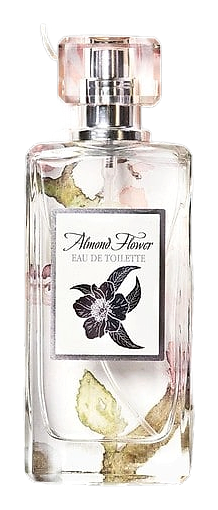
The house's documented public record begins in 2014, a year in which Ninel Perfume released an unusually broad slate of fragrances. That single year saw the launch of ten known compositions, including the numbered editions No. 3, No. 6, No. 23, No. 24, No. 26, No. 29, and No. 30, as well as the floral-led Almond Flower, Honeysuckle, and White Orchid. The concentration of releases suggests 2014 was either a founding year or a pivotal debut moment for the brand, though Ninel itself has not publicly clarified which interpretation is correct. What the catalogue does make clear is that the brand treats its numbered series as a deliberate architectural choice rather than a placeholder. Collecting those ten 2014 releases gives a near-complete cross-section of the house's early output, and that breadth itself becomes part of the brand's story. Beyond the 2014 slate, independent coverage of Ninel's origins, founders, and earlier milestones is limited, leaving much of the pre-history in the realm of inference rather than documented fact. Ninel's creative direction reads as a study in restraint. Rather than building each release around a narrative campaign or celebrity association, the house relies on a numbering convention to suggest a quiet progression, almost as though each fragrance is the next entry in an ongoing private ledger. That choice does real philosophical work: it asks the wearer to evaluate a scent on olfactory terms, not branding terms. The floral additions (Almond Flower, Honeysuckle, and White Orchid) sit comfortably alongside the numbered series, indicating that the house sees both floral realism and abstract composition as part of the same project. There is no public manifesto from Ninel spelling out a guiding principle, but the 2014 catalogue's consistency hints at a brand that values cataloguing over storytelling, and presence over proclamation.