

Heritage
A house, in its own words
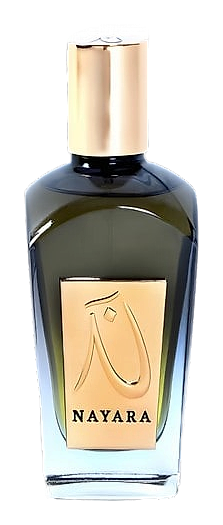
Nayara’s documented history begins in 2019, the year recorded by fragrance databases and reflected in the launch dates of its three known perfumes. There is no reliable public evidence in the supplied research identifying a longer corporate history, a founder by name, or an earlier set of releases. The name Nayara has roots in Basque usage, where it is associated with the phrase meaning “Queen of Flowers.” That botanical reference gives the house a floral foundation, but the available brand and retailer descriptions also characterize its style as oriental and amber focused. The house appears to have built its initial catalogue around three distinct titles: The One, One in a Million, and I am not Sorry. Each arrived in 2019, according to the fragrance records reviewed here. Public listings place Nayara in Saudi Arabia, the United Arab Emirates, Italy, Switzerland, Sweden, Spain, and wider Europe, suggesting an international retail footprint from an early stage. Those listings do not establish where the perfumes were formulated or manufactured, so the house should not be assigned a production origin without further confirmation. Its story is therefore one of a brief, sharply defined catalogue rather than a long institutional narrative. The verifiable milestones are the 2019 founding record and the same-year release of its three documented fragrances. Nayara’s public identity centers on fragrance as a form of personal expression rather than a heavily documented manifesto. The brand describes its perfumes through names that imply different attitudes and moods, from the confidence of The One to the playful provocation of I am not Sorry. Its stated scent direction combines oriental and amber materials, a choice that points toward warmth, density, and skin contact. The house is also presented as niche, a term that is useful here mainly as a market description rather than evidence of a particular production model. Available references connect the name to flowers, while the scent descriptions emphasize richer amber and oriental structures, creating a deliberate contrast between a floral name and a darker olfactory wardrobe. No named perfumer is linked to the three releases, and no independent source provides a detailed creative manifesto. For that reason, Nayara’s philosophy can be read most clearly through its naming and collection composition: fragrance is treated as an expressive object, capable of carrying a distinct point of view. The compact range suggests selectivity over breadth, though the evidence does not establish a formal policy behind the limited number of releases.