

Heritage
A house, in its own words
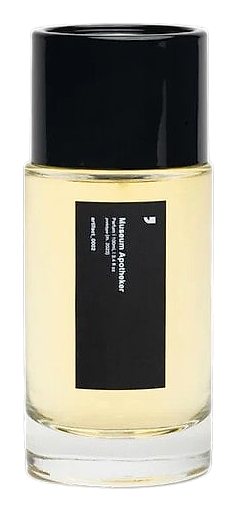
Museum Apotheker appears to be a relatively recent independent fragrance house, and the brand's public-facing story centres on an idea rather than a long institutional lineage. It describes itself as aggregating historical, artistic and cultural interests in order to make a visual and aromatic commentary on contemporary fragrance culture. This sets the house apart from houses that foreground a founding perfumer or a family name. There is no widely documented founding year, founder biography or milestone history in the available material, and no third-party sources were found confirming a specific founding date or the identity of the creator behind the brand. What can be verified is the shape of the offering: parfum, incense and candles, arranged under a name that fuses the vocabulary of the museum with that of the apothecary. The brand's catalogue of Artifact fragrances, including Artifact-003, Artifact-0002 and Artifact-0001, all dated to 2023 in the available records, suggests a deliberate series structure with numbered editions. That serial approach echoes archival and cataloguing systems, reinforcing the curatorial frame. Museum Apotheker also occupies a broader cultural moment in which fragrance archives and scent museums have become visible reference points. The Osmothèque in Versailles, founded in 1990 and holding more than 3,200 historic scents, many no longer in production, represents the institutional extreme of perfume preservation. Closer to the brand's sensibility are smaller projects such as Mandy Aftel's Aftel Archive of Curious Scents, opened in 2017 as a one-room museum of materials and aromatic history, and the International Perfume Museum in Grasse, established in 1989. Museum Apotheker does not claim a connection to any of these institutions, but its self-description places it within the same conversation about scent as a document of culture. The creative vision behind Museum Apotheker rests on the proposition that fragrance is an interpretive medium. The house frames its work as the intersection of history, art and culture, with perfume acting as a commentary rather than a decorative accessory. That approach carries a certain restraint, since a curatorial position requires the maker to select, arrange and contextualise rather than simply assert novelty. The name captures the central tension of the brand. Museums gather objects into ordered collections and tell stories through juxtaposition. Apothecaries work with raw botanical and aromatic materials, measuring, macerating and compounding with technical discipline. The brand's stated ambition is to hold both ideas at once, blending the artistic framing of the museum with the methodical character of the apothecary. The resulting identity treats scent as capable of carrying memory and evoking place, an approach that also runs through the wider history of fragrance, from the scented oils and resins of ancient Egypt to the domestic perfumery of the modern home. Museum Apotheker's product categories, parfum, incense and candles, extend this thinking into ritual and atmosphere. Incense in particular has a long cultural record as a marker of space, ceremony and transition. The house's editorial positioning, with numbered Artifact releases and a catalogue that treats each scent as a distinct interpretive object, suggests a practice built around the concept of the edition rather than the seasonal launch. Whether these ideas are fully realised in the compositions themselves would require detailed olfactive review, but the stated philosophy is coherent and specific: build a collection, frame it, and let the wearer read the references.