Heritage
A house, in its own words
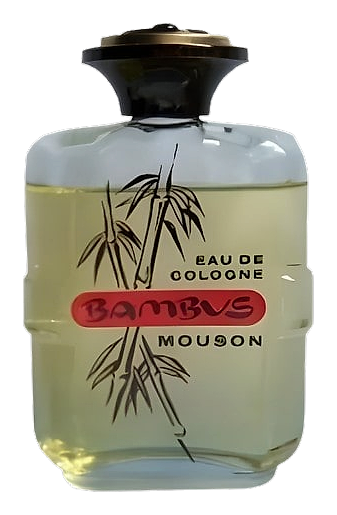
The available record offers only a narrow historical window into Mouson. A vintage listing identifies a Mouson Lavender perfume miniature under J.G. Mouson & Co. and dates it to the 1930s. That association gives the name a period and a corporate form, but it does not reveal where the company began, who founded it, or how it operated. No dependable source in the supplied material documents a Mouson founding date, founder, address, or later milestones. The general histories of perfume included in the research trace fragrance production from ancient Greek and Roman use through later glove perfumers and the emergence of Eau de Cologne, but they do not provide a Mouson-specific lineage. For that reason, it would be speculative to place Mouson within a national perfume tradition or connect it to a particular perfumer. The brand may have disappeared from mainstream retail, changed ownership, or survived through objects rather than a current public house. Only those possibilities can be raised, not stated. What can be said with confidence is that J.G. Mouson & Co. name appeared on a surviving lavender fragrance miniature, and that Mouson also has a fragrance or catalogue entry titled 1930 in the Silloria database. The surviving bottle is therefore the most concrete bridge between the name and its historical identity. Mouson's creative philosophy cannot be reconstructed from promotional language because the supplied research contains no current About-page text, formula records, interviews, or statements from the house. The documented 1930s Lavender miniature does, however, point toward a period when floral lavender fragrance was presented as a recognizable category rather than as an abstract lifestyle concept. That is a limited observation, not evidence of a broader brand method. Likewise, the title 1930 may suggest an interest in historical naming, but without an authoritative explanation from Mouson it would be unsafe to claim that the brand deliberately revives the interwar period. Any account of Mouson's values should therefore remain restrained. The name is associated here with material survival, fragrance history, and the study of vintage objects. Its appeal lies partly in the questions left open by that record: who made Mouson, how was the Lavender miniature composed, what did the bottle look like beyond its miniature format, and why has the name persisted in fragrance listings? These are matters for further archival work. Silloria's role is to preserve the verified traces while separating them from later assumptions. A responsible profile of Mouson begins with the documented object, acknowledges the gaps, and avoids turning a single vintage listing into a polished origin story.