





Heritage
A house, in its own words
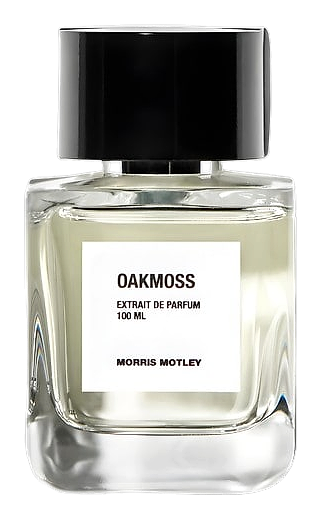
Morris Motley's origin story draws from an unexpected place: the Brutalist architectural movement. According to the brand's stated direction, founders began exploring Brutalism as a framework for understanding masculinity, design, and craftsmanship. They found in this aesthetic philosophy a quality they believed could translate meaningfully into fragrance. Rather than positioning themselves within established perfume house traditions, Morris Motley built their identity around this architectural reference point, suggesting a deliberate rejection of conventional fragrance marketing language in favor of something rooted in structural form and material honesty. The brand emerged in the Australian market during a period when independent perfume houses were gaining traction globally, though Morris Motley has maintained a relatively focused presence rather than pursuing aggressive international expansion. Their earliest documented fragrance release, Oakmoss, appeared in 2020 and would later become significant to the brand's trajectory when regulatory pressures around oakmoss restrictions prompted a reformulation and rebranding as Vert Gothique in 2024. This transition represented a pivotal moment in the brand's evolution, transforming what could have been a limitation into a deliberate creative statement about adaptation and renewal. The brand's product expansion into categories like handwash, bodywash, and hair care suggests a philosophy of extending their sensory universe beyond the wrist and neck, though documentation of specific milestones or significant partnerships remains limited in publicly available sources. The philosophical underpinning of Morris Motley rests on a deliberate collision between architectural thinking and olfactory creation. The brand's engagement with Brutalism is not incidental but foundational to their creative worldview. They identified in this architectural movement a particular quality of masculinity rooted in material honesty and structural clarity rather than ornamentation. This translates into an approach that favors bold, uncompromising fragrance statements over subtle or讨好性的 compositions. The brand appears to resist the conventional vocabulary of perfumery marketing, instead framing their work through references to design, craft, and physical form. Their perfumer Karine Goranchella works within this framework to create scents that function as architectural interventions rather than ambient background. The multi-sensory product range, spanning skincare and haircare alongside fragrance, suggests a belief that scent experience should not be confined to traditional application points or occasions. Rather, the brand envisions their aromatic universe as something that permeates daily rituals through body wash, handwash, and styling products. This integrated approach implies a philosophy where fragrance becomes inseparable from the broader sensory experience of grooming and self-presentation, challenging the conventional hierarchy that places perfume as the pinnacle of a fragrance collection.