







Heritage
A house, in its own words
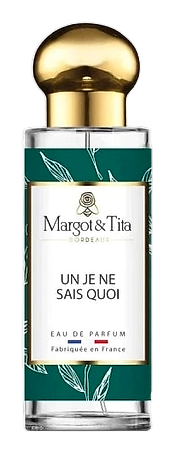
The story of Margot&Tita begins with two women from the Bordeaux region whose contrasting scent memories sparked a family conversation that later became a brand. Their granddaughter, Julie Schoell, inherited the anecdotes and turned them into a business in 2018, naming the house after the two matriarchs. The inaugural launch featured a handful of fragrances that combined natural French absolutes with a philosophy of simplicity. Over the next two years the house expanded its catalogue, adding scents such as L'Amour est dans L'Air, Elixir de Minuit, Flirt d'Été, Ça Baigne pour Moi, La Femme Parfaite and Beau Tenebreux, all released in 2018. In 2020 the brand introduced Week‑End à Arcachon and Le Rose Vous Va Si Bien, reflecting a growing confidence in narrative‑driven naming. A notable milestone arrived in 2022 when Margot&Tita adopted digital printing for its illustrated bottle sleeves, allowing each limited edition to feature a unique artwork. The 2026 release of Nous Les Femmes marked the first fragrance to celebrate a specific year, underscoring the house’s commitment to evolving its story while staying anchored in Bordeaux. Throughout its first decade the label has remained privately owned, sourcing ingredients from French growers and maintaining production within the country, a choice that reinforces its regional identity. Margot&Tita treats perfume as wearable clothing rather than a decorative accessory. The brand’s creative vision rests on the idea that scent should complement daily life without demanding attention. Simplicity guides every decision, from ingredient selection to packaging, and the house insists on cruelty‑free, vegan formulations that respect both the wearer and the environment. Transparency is a core value; each bottle lists the origin of its key notes, allowing consumers to trace the journey from field to fragrance. The brand also embraces the notion of mixability, encouraging users to layer scents in a personal way, much like choosing garments for an outfit. This approach reflects a broader belief that fragrance can be a quiet expression of identity rather than a loud statement.