Heritage
A house, in its own words
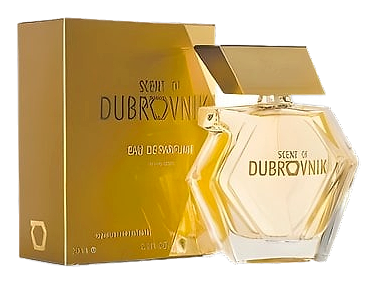
Macal Palma occupies an unusual place in fragrance history: a brand with a clearly dated creation but almost no documented backstory. The only perfume attributed to the house, Scent of Dubrovnik, first appeared in fragrance databases in 2007, the same year cited consistently across independent cataloguing sites such as Fragrantica and Parfumo. That consistency across two separate third-party databases is the strongest factual anchor available for the brand. The name itself, Macal Palma, carries Mediterranean overtones. Macal is associated in regional usage with a southerly wind, while Palma points to palms and coastal landscapes. Together, they suggest a sensibility drawn from Adriatic or wider Mediterranean geography. The perfume's title, Scent of Dubrovnik, reinforces this reading, naming a specific UNESCO-listed old town on Croatia's Dalmatian coast, known for its limestone streets, baroque architecture, and proximity to the Elaphiti Islands. No founding date, founder biography, or corporate origin story has been confirmed in any independent source we could locate. Press coverage, interviews, and trade publications do not appear to have profiled the house in depth. For now, the heritage of Macal Palma rests on this single, well-catalogued creation and the geographical poetry embedded in its naming. What can be inferred about Macal Palma's creative direction comes almost entirely from the single fragrance it has released. Naming a perfume Scent of Dubrovnik is itself a philosophical statement: it proposes that a place, with its stones, salt air, gardens, and history, can be distilled into a wearable form. This is the olfactive equivalent of literary place-writing, where the goal is not to impress with novelty but to evoke a specific corner of the world with fidelity. The choice of Dubrovnik, a city long associated with cultural exchange between east and west, suggests an interest in cross-cultural resonance rather than a single regional identity. Mediterranean perfumery traditions, from citrus colognes to resinous incense compositions, offer a broad palette for such an exercise, and the brand's name hints at an affinity for the sensory textures of coastal life: wind, sun-warmed foliage, and salt. Without interviews or manifestos to draw from, the philosophy remains implicit in the work itself. Scent of Dubrovnik stands as both the brand's statement of intent and its sole piece of evidence, a quiet declaration that a single, well-considered composition can carry an entire artistic identity.