Heritage
A house, in its own words
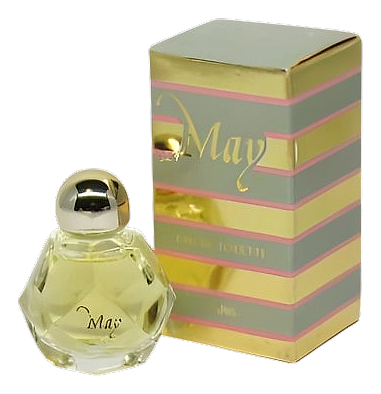
The documented history of Logos as a fragrance house is thin, and most of what appears in search results under the name refers to entirely unrelated subjects: the Logos Bible Study software platform, graphic design tools like Canva's logo maker, and the philosophical concept of logos itself. This makes pinning down a founding year, founder, or geographic origin difficult from publicly available sources. The two fragrances associated with the brand, May and 1989, hint at an interest in temporal markers and seasonal anchors, both common devices in independent and artistic perfumery. Without corroborating press coverage, interviews, or industry registry entries, the brand's origins remain largely unconfirmed. It is possible that Logos operates as a small independent project, a pseudonym, or a label tied to a specific niche community, but none of these readings can be stated as fact. The absence of a widely cited founding narrative is itself a notable characteristic, one that sets Logos apart from houses that rely on legacy storytelling to anchor their identity. As more information becomes available through independent fragrance databases and retail listings, a clearer picture of the brand's provenance may emerge. For now, the verifiable record is limited to the names of its compositions and the conceptual resonance of its title. Logos takes its name from the Greek term lógos, a word that has carried different meanings across millennia, from Heraclitus's cosmic principle of reason to its theological role in Christian scripture as the divine word. That range of meaning, from rational order to spoken language to spiritual expression, offers a natural philosophical frame for a fragrance house. The brand's two known compositions, May and 1989, suggest a sensibility drawn to precise temporal and seasonal reference points rather than abstract or decorative scent profiles. This kind of naming convention often signals a perfumer interested in memory, autobiography, or the phenomenology of specific moments. The pairing of a month (May) with a year (1989) creates a kind of grammar, a structure of time that invites the wearer to consider fragrance as a form of language. The concept of logos itself implies that beneath surface variation there is an underlying order, an idea that aligns with certain strands of contemporary perfumery that treat scent as a system of signs. Whether Logos consciously builds on this intellectual inheritance or simply draws atmospheric inspiration from it is not stated in any available source. The result, at minimum, is a brand name that asks the curious consumer to think about what fragrance communicates, and how.