
The Story
Why it exists.
The beginning
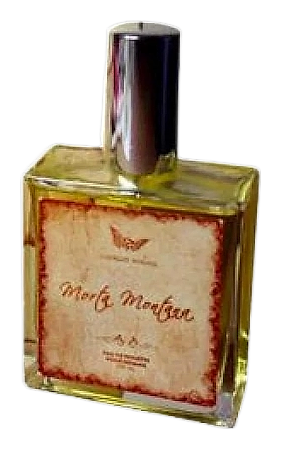
Morta Montana arrived in 2010 as part of Giorgio Michel's debut quartet, a deliberate collection meant to demonstrate the house's ability to distill complex fragrance families into essential gestures. The name conjures a dead mountain, but rather than desolation, it suggests the pristine stillness that follows a season's end. Inspired by that hush before true winter, the fragrance strips away opening and drydown conventions to present its character in its purest form. The house wanted a scent that captured the honest simplicity of high-altitude air, unfiltered and straightforward.
The decision to build Morta Montana entirely from heart notes reflects a philosophy of restraint. Rather than constructing a traditional pyramid with layered complexity, the composition asks whether a single, sustained accord can create something memorable. Mandarin orange was chosen for its clarity and universal appeal, while green notes provide the necessary counterweight to keep the citrus from feeling commercial. Tog ether, they form an unlikely pairing that works precisely because neither dominates. The result is a fragrance that smells like a specific moment, not a general impression.
The evolution
The fragrance opens instantly into its heart, a mandarin orange and green notes accord that remains constant throughout wear. Mandarin orange provides immediate brightness, a clean citrus character that evokes the sharp clarity of mountain mornings. Green notes interweave throughout, offering an herbal, slightly bitter dimension that prevents the sweetness from overwhelming. There is no transition, no development, no reveal. The evolution is lateral rather than vertical: the accord maintains its character while slowly diminishing in intensity over four or more hours. What changes is volume, not character.
Cultural impact
Morta Montana emerged in 2010 as Giorgio Michel’s response to a growing appetite for crisp, citrus‑green fragrances that could bridge the gap between winter’s coolness and spring’s renewal. Its mandarin orange note draws on Mediterranean fruit traditions, evoking the sun‑kissed groves of southern Italy, while the verdant green heart references the resurgence of botanical motifs in early‑2010s perfumery. The fragrance quickly found a niche among creative professionals who prized a scent that felt both invigorating and understated, allowing it to become a subtle cultural marker in art‑gallery openings and design studios.