


Heritage
A house, in its own words
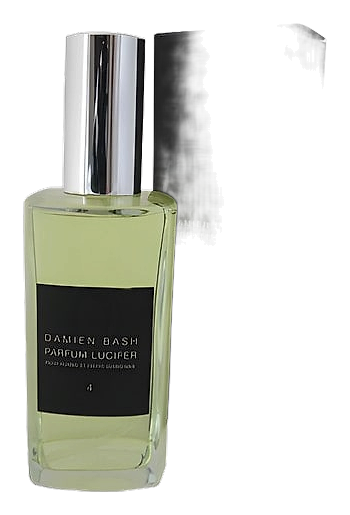
Independent verification of Damien Bash's origins, training, and early career remains scarce. Publicly available coverage describes a perfumer who built his brand identity almost entirely around the Lucifer fragrance line, launched in the year 2000. The brand emerged during a period when the niche fragrance movement was beginning to gain traction outside of traditional French houses, and Bash carved out a distinct identity by leaning into controversial naming and thematic provocation rather than heritage or pedigree. His background in perfumery, whether formally trained in Grasse or self-taught, is not documented in the independent sources reviewed for this profile, which is itself characteristic of the more enigmatic independent perfumers of his generation. The Lucifer line itself was conceived as a numbered series, a structural choice that mirrors the approach of classical haute perfumery houses that release numbered extraits and limited series, though Bash applied that framework to a deliberately transgressive concept. Over time, the brand expanded from the core numbered releases to include Parfum Lucifer Sin, a thematic extension of the fallen angel narrative, and Omen, a standalone composition that signals the creator's willingness to explore the dark romantic register from multiple angles. Despite the provocative branding, the line has persisted in niche fragrance communities and online collector forums, where discussions of vintage Lucifer bottles surface regularly. What the brand lacks in corporate infrastructure it compensates for with thematic consistency, a quality that has allowed the name to remain relevant across more than two decades. Bash's creative vision centers on the idea that fragrance can carry narrative weight, that a scent can be built around a mythological or literary concept and still function as a wearable composition. The Lucifer series is not merely a marketing conceit. It represents a philosophical bet that provocation and artistry are not mutually exclusive, and that collectors respond to perfume which commits fully to a thematic premise. The decision to market the line as unisex reflects an early alignment with the blurring of gendered fragrance categories, a stance that felt ahead of the curve in 2000 and has since become a baseline expectation across much of the niche segment. His approach treats the wearer as a collaborator in the storytelling rather than a passive consumer, inviting them to inhabit the fallen angel archetype or to carry its symbolic charge. This positions each bottle as something closer to a talisman than a mere toiletry product. Bash's work resists the easy categorization that mainstream fragrance marketing demands, choosing instead to let the compositions and their thematic scaffolding speak for themselves. The result is a catalog that feels curated by a single creative sensibility rather than focus-grouped for mass appeal, which is precisely what draws a particular kind of collector to his door.