







The Heritage
The Story of Asalat Al Oud
Asalat Al Oud presents a curated collection of oriental fragrances that centre on the deep, resinous character of agarwood. The line includes Anber Vanilla, Tobacco Oud, Oud Kalemat, Lizar Oud, Line Oud, Eloud Al Bahrint, Sehr Al Jazeera, Oud Al Misk, Mukhalat Al Dar and Sugary Oud. Each scent balances traditional Middle Eastern ingredients with modern compositional techniques, offering a focused yet varied olfactory experience for those who appreciate the richness of authentic oud.
Heritage
The story of Asalat Al Oud begins within the larger Arabian Oud family, which opened its first boutique in the historic Souk of Riyadh in 1982. Arabian Oud grew to become one of the most recognised fragrance houses in the Gulf, building a network of artisans, suppliers and retail partners across the region. Around the early 2010s the company introduced Asalat Al Oud as a specialised line that would concentrate on pure oud expressions. The launch responded to a growing demand among collectors for unadulterated agarwood notes, a demand that the parent house could meet thanks to its long‑standing relationships with agarwood harvesters in India, Indonesia and the United Arab Emirates. Over the following years the line expanded its portfolio, adding blends that combine oud with vanilla, tobacco, spices and marine accords. By 2018 Asalat Al Oud had opened dedicated counters in major malls in Saudi Arabia, the United Arab Emirates and Kuwait, allowing customers to experience the fragrances side by side. The brand’s growth coincided with a broader resurgence of interest in traditional Middle Eastern perfumery, a trend documented in industry reports and cultural articles that highlight oud’s role as a heritage ingredient. As of 2023 the line continues to release limited editions that celebrate regional harvests, reinforcing its position as a bridge between historic oud practices and contemporary fragrance design.
Craftsmanship
Production begins with the selection of agarwood chips that meet strict quality criteria for resin content and aroma profile. The brand sources raw material from Indian Aquilaria trees, Indonesian forests and Emirati plantations, each region contributing a distinct tonal nuance. After harvesting, the chips undergo a cold‑press extraction that preserves volatile compounds often lost in heat‑based methods. The resulting oil is filtered and then blended in small batches by trained perfumers who follow recipes that balance oud with complementary ingredients such as vanilla, amber, saffron or citrus. Quality control includes gas‑chromatography analysis to verify the concentration of key aromatic molecules. Bottling takes place in climate‑controlled facilities to prevent oxidation; glass vessels are sealed with aluminum caps that protect the fragrance from light exposure. For oil‑based variants, the brand stores the product in dark amber bottles that further extend shelf life. Each batch receives a batch code that allows traceability back to the original harvest, a practice that aligns with the brand’s transparency promise. The final product undergoes a sensory evaluation by a panel of senior perfumers who assess longevity, sillage and fidelity to the intended scent profile before release.
Design Language
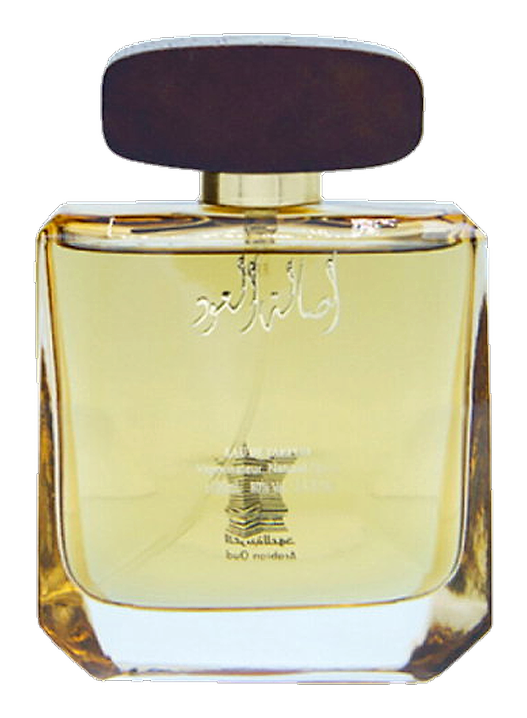
The visual identity of Asalat Al Oud reflects the simplicity of desert horizons combined with subtle luxury. Bottles feature clean, rectangular silhouettes that sit on matte black bases, allowing the deep amber of the liquid to become the focal point. Gold foil stamping adds the brand name in Arabic calligraphy, a nod to the cultural roots of the fragrance. Caps are crafted from brushed metal, sometimes accented with a single wooden inlay sourced from the same regions that provide the agarwood. Packaging boxes use heavyweight recycled paper with minimal graphic treatment; a single line of gold embossing conveys the brand name and scent title. The overall look avoids excessive ornamentation, instead relying on texture and material quality to convey a sense of understated elegance. In retail spaces, the brand displays scent strips on dark wood trays, reinforcing the connection between the product and its natural origins.
Philosophy
Asalat Al Oud frames its creative vision around authenticity and respect for the source material. The brand states that it seeks to preserve the natural character of agarwood while allowing room for artistic interpretation. This approach translates into a commitment to traceability; the company works directly with growers who follow age‑old harvesting methods that avoid over‑extraction. In formulation, the perfumers aim to let the oud speak clearly, using supporting notes that enhance rather than mask the wood’s complexity. The brand also emphasizes sustainability, supporting re‑planting programs in regions where agarwood trees are cultivated. Transparency forms another pillar of the philosophy: ingredient lists are published on product pages, and the brand encourages customers to learn about the cultural significance of oud in Middle Eastern rituals. By aligning craftsmanship with ethical sourcing, Asalat Al Oud positions itself as a steward of both scent and tradition.
Key Milestones
1982
Arabian Oud opens its first boutique in Riyadh's historic Souk, establishing a foundation for regional fragrance production.
2010
Asalat Al Oud line is introduced, focusing on pure oud expressions within the Arabian Oud portfolio.
2012
Launch of Oud Kalemat, a blend that pairs agarwood with warm spice notes, expanding the line's scent diversity.
2015
Brand opens dedicated counters in major Gulf malls, allowing direct consumer interaction with the fragrance range.
2018
Limited‑edition Lizar Oud is released, celebrating a specific harvest of high‑grade agarwood from Indonesia.
2021
Asalat Al Oud partners with sustainable agarwood farms in India, supporting re‑planting and fair‑trade initiatives.
At a Glance
Brand profile snapshot
Origin
Saudi Arabia
Founded
2010
Heritage
16
Years active
Collection
1
Fragrances released
Avg Rating
4.0
Community sentiment


