






Heritage
A house, in its own words
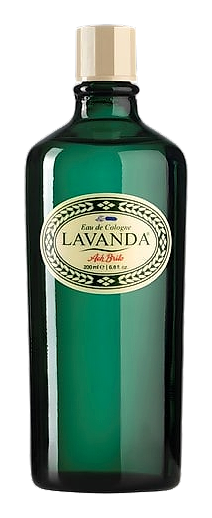
Ach. Brito's story begins not in 1918 but nearly three decades earlier, in 1887, when two Germans chose Porto as the setting for their ambitions. Ferdinand Claus, a chemist by training, and Georges Ph. Schweder, an importer, founded Claus & Schweder, reportedly the first soap and perfume factory in Portugal. Their technical expertise and access to raw materials established standards that would define Portuguese toilet soap production for generations. In 1918, brothers Achilles de Brito and Affonso de Brito acquired the business, reshaping its direction under a name drawn from Achilles' own first name. The Brito brothers brought new energy to an operation already rooted in German soap-making precision, and they gradually developed the signature product lines that would carry the brand into the 20th century. Musa and Claus, two distinct soap ranges, became synonymous with Portuguese toilet soap, their formulas reflecting the intersection of continental technique and local materials. The company remained a family enterprise, with generations of the Brito family overseeing production through periods of change and stability. This continuity preserved artisanal approaches that larger competitors abandoned. While Portugal's fragrance industry remained modest compared to French or Italian centers, Ach. Brito carved out a distinct position as a keeper of olfactory traditions. The 20th century brought measured evolution. Agua de Colonia Antiga, introduced in 1960, became one of the brand's most enduring creations, a Portuguese interpretation of cologne that resonated locally. The Lavanda fragrance, first released in 1929, remained in continuous production for decades, its simple lavender character a testament to the brand's commitment to straightforward, quality-driven formulas. Recent decades have seen the house expand beyond its soap-making origins into broader perfumery. The 2020s brought a wave of new releases, including Fava Tonka, Bergamota, Atlantico, and Magnolia (all 2023), signaling a more ambitious creative direction. The Barrocal, Arquivo, Comptoir d'Épices, and Chimera releases of 2025 demonstrated continued momentum. Throughout these changes, the brand maintained its Porto identity and its connection to the city's commercial heritage, operating within the same geographical context that shaped its founding. Ach. Brito approaches perfumery as an extension of its soap-making heritage rather than a departure from it. The brand operates from the premise that fragrance should be accessible and pleasurable, avoiding the abstraction that characterizes much contemporary perfumery. This perspective shapes everything from note selection to marketing language. The house draws frequently on Portuguese aromatic traditions. Lavender, a staple of the brand's portfolio since 1929, appears not as a nostalgic gesture but as a genuine commitment to ingredients with local resonance. Bergamot and tonka bean follow similar logic, connecting fragrances to Mediterranean and Atlantic influences that define Portuguese terroir. The Agua de Colonia Antiga, originally launched in 1960, exemplifies this approach: a cologne structured around citrus and neroli that feels distinctly Portuguese rather than derivative of French or Italian models. Rather than pursuing trend-driven innovation, Ach. Brito maintains formulas that have proven their durability over decades. The Lavanda fragrance from 1929 remains in production essentially unchanged, a signal that the brand values continuity over novelty. This stance reflects a philosophy rooted in craftsmanship rather than commerce, where success is measured by longevity rather than annual releases. The recent expansion into more complex fragrances suggests an evolution in thinking, but the underlying values remain consistent. Ingredients receive careful consideration, formulations prioritize balance over shock value, and the final products aim to function in daily life rather than merely impress on first encounter. This measured approach distinguishes Ach. Brito from houses that treat each release as a spectacle, positioning the brand instead as a reliable presence in Portuguese fragrance culture. Porto anchors the brand's identity. The city's position between the Atlantic coast and the Douro Valley, its history as a commercial hub, and its distinct cultural character all inform how the house presents itself. Ach. Brito's fragrances are not described as Portuguese in the manner of marketing shorthand; they are Portuguese in their materials, their references, and their understanding of what local customers value.